

By DEBRA HAIGHT
BCR Correspondent
With medical marijuana facilities opening in communities across Southwest Michigan and recreational marijuana businesses on the horizon, area leaders are taking stock of where marijuana fits into their community development plans.
The city of Buchanan is by all accounts the farthest along in welcoming medical marijuana facilities. The Zen Leaf provisioning center opened in late May in downtown Buchanan and is likely to be joined by other facilities in coming months.
“Everything has been going pretty well,” Zen Leaf owner and Buchanan general manager Billy Breen said last month. “We see it as a wonderful opportunity to serve the public. We’ve had a lot of positive feedback from people saying they now don’t have to drive a distance to get medical marijuana.”

Breen said they’ve gotten customers from throughout Southwest Michigan. “We’re seeing people of all ages come in,” he said. “They’re buying everything from flowers to concentrate to topical creams.”
He said his company is taking a wait and see attitude when it comes to recreational marijuana. “We’re concentrating on day to day care of our patients and providing them with the products they need,” he said. “We plan to sit back and wait and see what the city will do. No matter what, we will always serve our medical patients.”
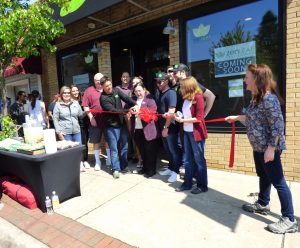
He said his company has a “great relationship” with city officials in Buchanan. He expects that marijuana will eventually become more commonplace and accepted here as it is in other states like Colorado where it has been legal longer. “A lot of what we do is still education,” he said.
Buchanan City Manager William Marx said he’s excited about what’s happened so far and the potential for future development. Besides Zen Leaf, the city has approved four other dispensaries which could sell recreational marijuana if and when the city decides to opt in, he said.
“We’re almost behind on the conversation,” Marx said relative to recreational marijuana. “In November, we had an item on the agenda to opt out but we took no vote. We’re so vulnerable now, the state could pass the rules and we would have no control as to where it could go. We’re pushing the planning commission to pass zoning regulations.”
While the expected state excise tax revenue originally associated with retail medical marijuana has changed since voters approved recreational marijuana, he said he thinks the city’s marijuana venture will be worth it.
“It’s going to have an incredible impact on the city with more tax revenue coming in from new buildings constructed and improvements to existing buildings,” he said. “For example, Redbud Roots plan to make a $22 to $25 million investment in the next 12 months.”
What Marx was referring to was the elimination of the three percent excise tax on medical marijuana provisioning centers that occurred after voters legalized recreational marijuana last fall. Initially, leaders in communities that had opted into medical marijuana had expected to get a share of an estimated $24 million in excise tax revenue.
Jennifer Rigterink of the Michigan Municipal League reported recently that her organization has worked to keep communities informed of the revenue changes connected with medical marijuana. “Sometimes the reason why communities opted in was the revenue with the three percent excise tax and that has gone away,” she said.
Communities will still be able to charge up to $5,000 for each application fee to cover their administrative costs, she said. Once the rules are set down for recreational marijuana facilities, communities can charge them up to $5,000 in application fees.
Rigterink noted that communities allowing recreational marijuana will get a piece of the excise tax pie, but a smaller percentage than what had been available with the medical marijuana. “Whatever money is collected, the state gets first dibs,” she said. “Then money will go for research and development, school aid, roads and bridges before counties and cities.”
“There’s definitely money to be made in the industry, but that doesn’t necessarily mean that much will trickle down to county and local governments,” she added. “Some communities are thinking about economic development and selling underutilized properties. If you’re solely looking at it bringing in revenue, you’re looking through the wrong lens.”
As for why the provision was added ending the medical marijuana excise tax, she said she’s heard different reasons. “I’ve heard a number of reasons,” she said. “Some legislators said they thought people would move from medical to recreational marijuana when the recreational was approved. There’s been no real explanation.”
She said some communities around the state have opted out of both medical and recreational marijuana while others have opted into allowing both types facilities. She said still other communities have opted into the medical but are opting out of the recreational until state rules are published.
The city of Niles has also embraced marijuana. Community Development Director Sanya Vitale said the city has approved five medical marijuana grow facilities, three processing facilities and four provisioning centers. One, MJM, is expected to open this summer. She said the city is still opting out of recreational marijuana until state rules come out.
Vitale said city leaders see the marijuana businesses as bringing a number of benefits. “People are seeking out the city for product, housing and business ventures in remarkable numbers with home sales up, revenue up and new businesses coming to town,” she said.
“The city doesn’t expect to make much income on this adventure,” she added. “We are supportive of the vote of the populace and our constituency and as such we have developed rules and regulations with the input of the community to best meet our needs. We also do expect secondary and tertiary businesses will do quite well.”
Leave a Reply
You must be logged in to post a comment.