
By DEBRA HAIGHT
BCR Correspondent
BARODA, MI – Baroda village and township officials have started the process that could result in the dissolution or disincorporation of the village. Their actions last week to form a commission to study the matter came after residents submitted a petition on disincorporation.
Baroda Village Council members met last Monday to approve the new commission to study the issue while Baroda Township Board members met the next night to approve a similar resolution. Baroda Township appointed Planning Commission Chairman Dave Schultz, Township Clerk Christina Price, and Township Supervisor Dennis Krotzer to the commission, while the village has not made their appointments.
“The Baroda Township goal will be for the Commission to complete a fact-finding report for the residents of Baroda Township and Baroda Village by July 15, 2026 for presentation to both boards in late July in order for this issue to [be] on the November 3, 2026 election,” Krotzer said.
Village President Michael Price said they will be meeting with their attorney to make sure they are following all the disincorporation steps correctly. Both Price and Krotzer said they expect the commission meetings to be open to the public.
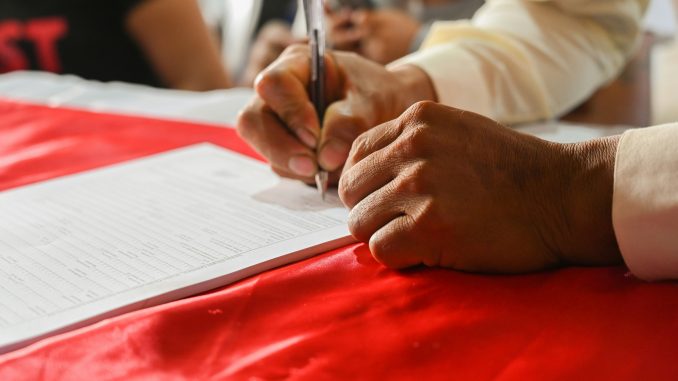
The issue of dissolving the village has been discussed since last year and has been the subject of two petition drives. The first petition started last summer ran out of time to get on last November’s ballot, but organizers recirculated the petition in January and submitted the signatures they’d collected to the township last week.
Petition organizers Jim and Joanna Whitehead said they were inspired to start their effort by the twin ideas of lower taxes and smaller government. Joanna Whitehead said they started asking themselves why they were paying so much more in taxes as village residents than what they’d pay if they were in the township.
“We studied the issue and we honestly believe that we can do more with less,” Jim Whitehead said. “The village plows the streets and picks up trash but outside of that, what does the village do for us?”
They noted that high property taxes is a concern for everybody, from young families starting out to older people worried about being able to stay in their home. They noted that the influx of second home owners has only served to raise property values and property taxes.
They reported that they gathered over 130 signatures on their petitions and only needed 118 for them to go through. The 118 figure represents 15% of the number of registered voters in the village.
They said it is their understanding that the village and the township will each appoint three members to the commission, which will then research the dissolution issue and bring a recommendation back to both boards in July. The goal is to get the question on the November ballot.
No matter what happens, the Whiteheads said they’ve enjoyed the process. “It’s been a very enjoyable experience talking to people,” Jim Whitehead said. “People just want to be heard … We’re hoping we can convince people that it will be good for everybody. We both believe that the township is capable of governing both the township and the village.”
People have debated the pros and cons of dissolution or disincorporation on Facebook pages since last summer. Some have questioned whether such an action would actually lower taxes for village residents and asked what the unforeseen consequences could be, including taking the focus off of other critical local issues.
Another of the questions that will have to be answered is whether such a move has to be approved by just a majority of voters or a two-thirds vote. Some have claimed that a two-thirds vote is required when it comes before voters because of a petition and just a majority vote if it is something that the governing boards put on the ballot.
A 2021 article from the Michigan State University Extension Service on the issue noted that most disincorporation and/or dissolution efforts have not been successful over the decades. The main places where such efforts have been approved by voters have been in Battle Creek and Iron River.