

ST. JOSEPH – Berrien County officials are getting closer to a solution to fix the county’s public transportation woes. The current system with four separate providers leaves a good part of the county without direct transportation services.
Southwest Michigan Planning Commission Executive Director John Egelhaaf
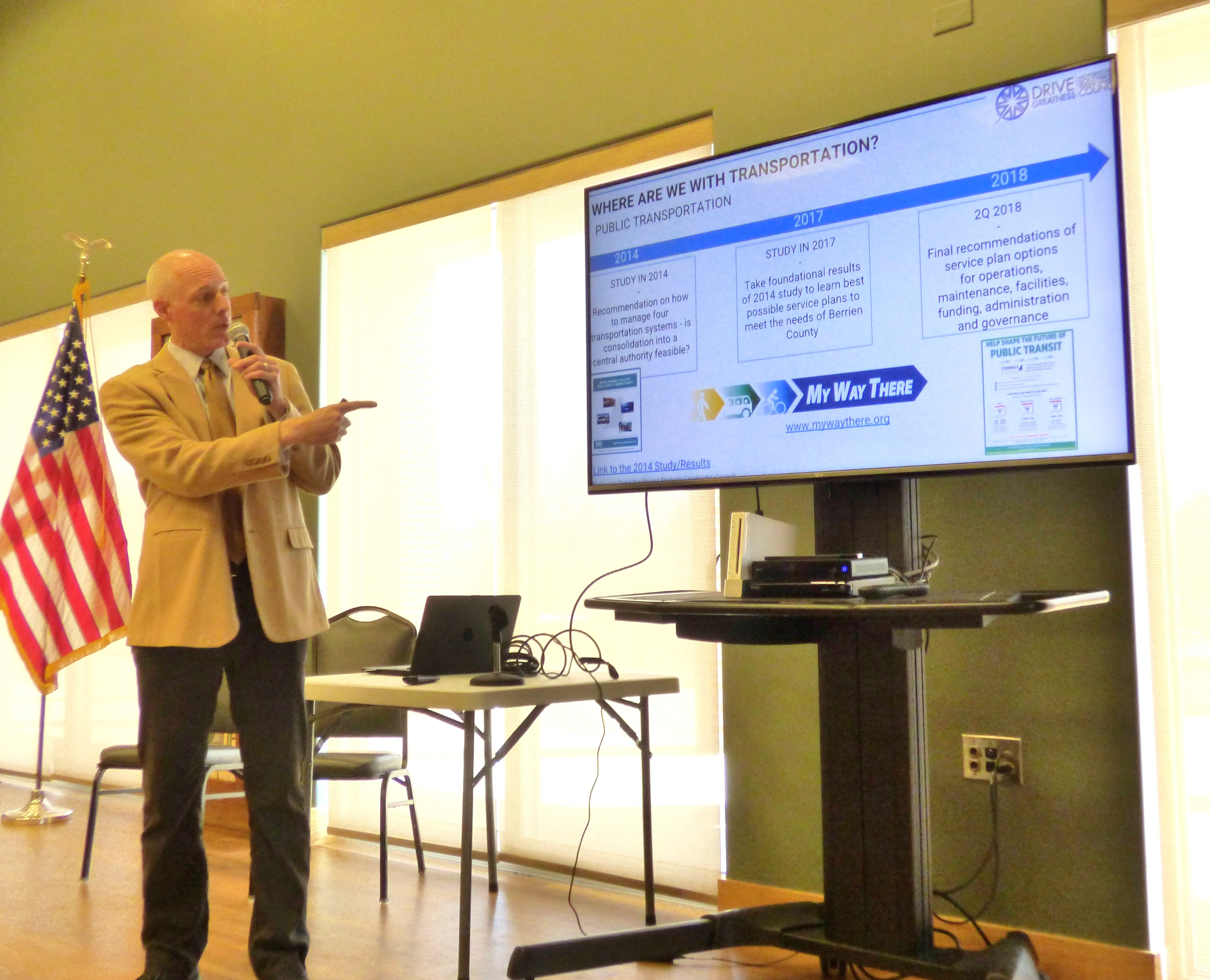
recently spoke about the county’s public transportation prospects to Clark salaried retirees at the Buchanan Area Senior Center. He noted that his organization serves Berrien, Cass and Van Buren counties to help solve regional issues.
In this case, the Southwest Michigan Planning Commission has been working with Berrien County officials on the issue. Egelhaaf reported on the results of last year’s forums and the prospects for establishing a countywide transit system.
He noted that while Cass County has two providers and Van Buren County one provider, Berrien County has four different providers. The county is currently served by the Twin Cities Area Transportation Authority in the Twin Cities area, Buchanan Dial-A-Ride, Niles Dial-A-Ride and Berrien Bus.
“The ability to provide seamless transportation is challenging,” he said. “These authorities were established when downtown was where people went to get goods and services. They were city-centric. Now, homes are more spread out and public transportation is different with longer routes.”
As he noted, there are significant gaps in the county where no public transit is available as well as areas where there is public transit although people need to go through two or three service areas. “If you want to go from Buchanan to Benton Harbor, you have to go through three service areas,” he said.
“It can be hard to get to work, to medical appointments and to school if people take classes at Lake Michigan College or Southwestern Michigan College,” he added.
Egelhaaf said the county is two-thirds through the process that began in 2014 with a Connect Berrien study and continued last year with forums and surveys of public opinion. The 2014 report studied how the four systems could be collapsed into one authority and how public transportation services could be better delivered.
“We’re at the tail end now, about two-thirds of the way through,” he said. “We will be done later this year and have a final recommendation of what a single authority would look like and how it can be done. We’re starting to get our arms around it.”
He said the outlook is better this time for a solution as not only Berrien County officials and the SWMPC have gotten involved but also private and public entities. “Never before have so many people gotten interested,” he said.
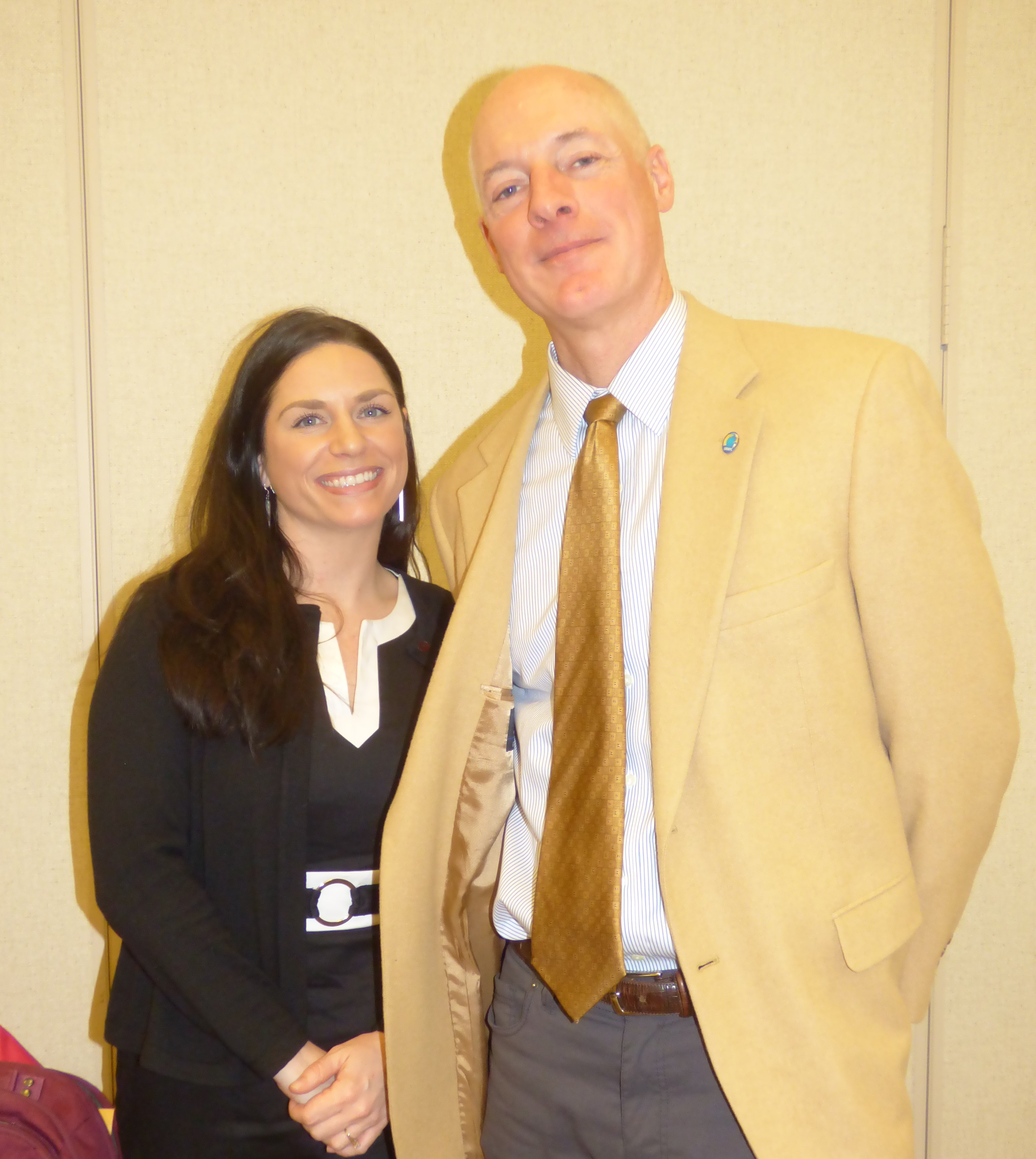
Reasons he gave for considering having a single countywide transit authority include having opportunities for savings in administration, marketing, planning and vehicle maintenance. “The direct cost savings would be applied to gaps in service areas to establish new service,” he said.
He said having one single authority with expanded routes could also lead to increased ridership numbers if people have ways to get to other parts of the county as well as to the South Bend-Mishawaka area. He said the four transit authorities now operate less efficiently with less riders than counties of similar size in the state.
He said one proposal under consideration would have the four authorities merged into one and a countywide millage levied. He noted that municipalities that already have a millage could actually see their millage rates go down. “If it’s countywide, we’re levying on more people which would bring in more revenue,” he said.
Although the idea of having one countywide authority might not be popular with
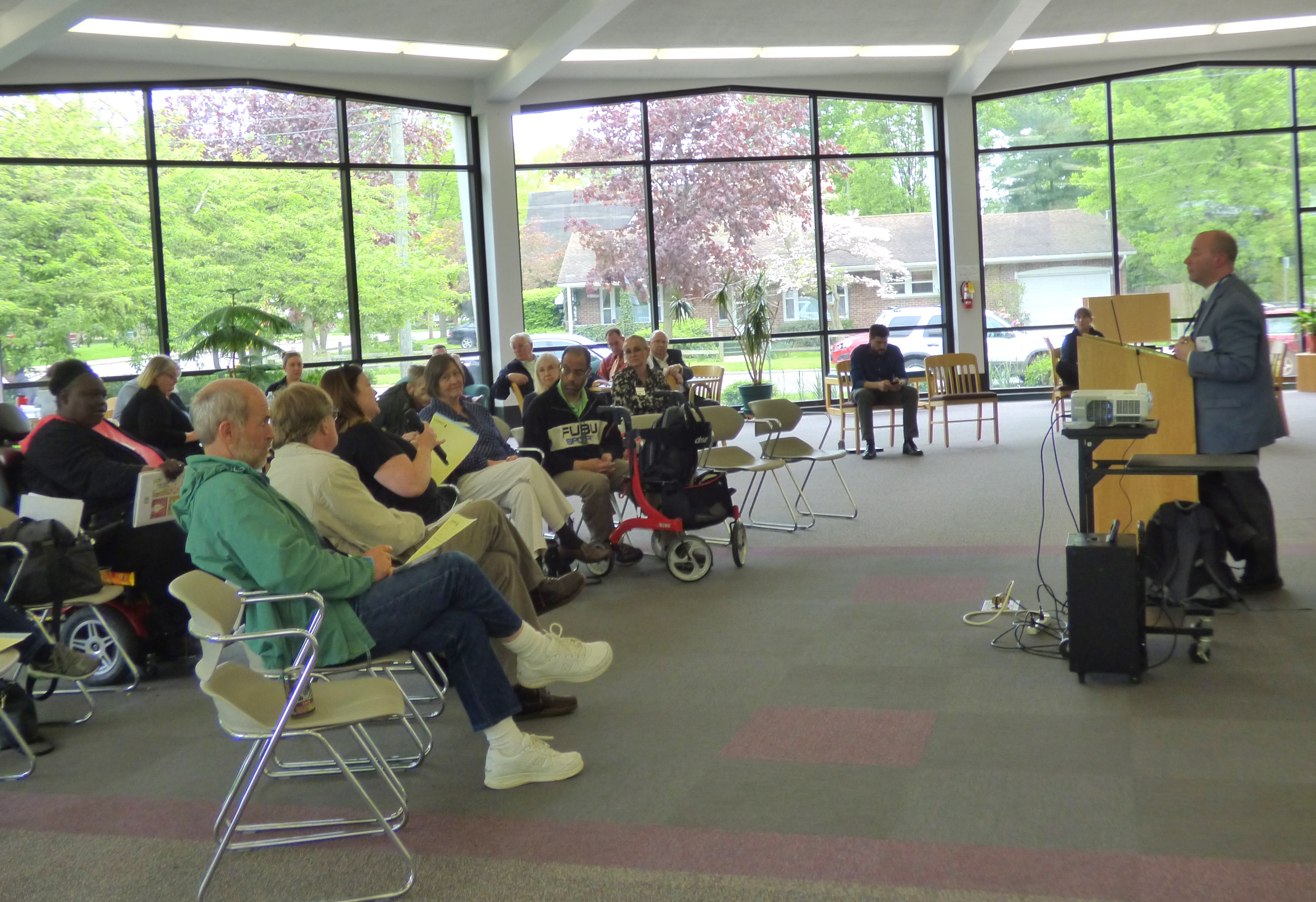
everyone, he said something has to be done to meet the needs of badly underserved populations.
Leave a Reply
You must be logged in to post a comment.