

By DEBRA HAIGHT
BCR Correspondent
NILES – As the debate over emergency youth vaping rules in Michigan now goes to the Michigan Supreme Court, Berrien County Sheriff’s Department Crime Prevention Coordinator Kelly Laesch took time last week to inform the public about the dangers of youth vaping.
Michigan Gov. Gretchen Whitmer announced a ban of flavored e-cigarettes in September after a number of vaping related deaths and illnesses around the country. The ban was put on hold earlier this month by the Michigan Court of Claims and the issue is now headed to the Michigan Supreme Court.
The flavored e-cigarette ban was challenged by a number of 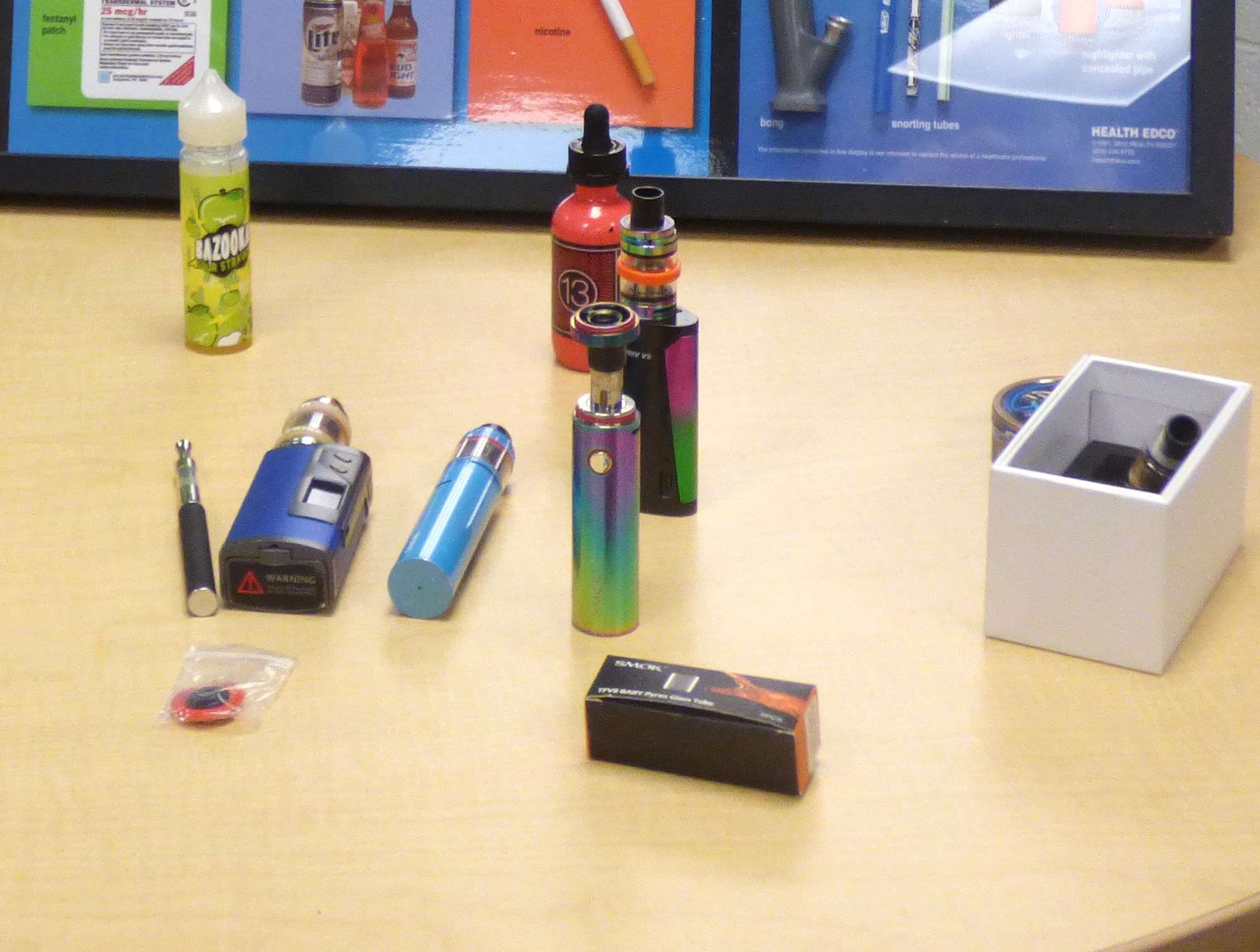 vape shops who said the ban was hurting their businesses and could cause adult e-cigarette users to return to smoking if the flavored products are taken off the market.
Last week’s “Vaping 101 Forum” was held at Niles High School and had about two dozen school administrators and parents in attendance. Laesch noted that she’s made presentations to other school and community groups and expects to make more as she spreads the word about the dangers of youth vaping.
She said she first learned about vaping and its dangers during earlier parts of her law enforcement career when she worked in narcotics. With the recent concerns about vaping deaths, she’s spreading the message to schools and community groups.
She said teen vaping is a growing concern both here in Southwest Michigan and throughout the country. Not only are more teens trying vaping products, parents and teachers are unfortunately unaware of the dangers and the fact that teens are even using these products.
Her advice to parents included talking with their kids about marijuana and nicotine, educating themselves and checking teens’ social media posts. “Set a good example yourself and get help, parents often underestimate the seriousness of drug use,” she said. “I’d rather have parents talk to kids than have them get information from their peers.”
Laesch said that although the use of both nicotine and THC laced vaping products are illegal for underaged youth to use, producers are purposefully marketing vaping products to teens through the use of flavored materials and colorful vaporizers and other vaping equipment.
“Industry tactics include making the products cheap, sweet with no aftertaste, easy to get and marketing specifically to teens,” she said. “Teens can get vaping products that are personalized with their names, that are colorful and bright.”
Her “Vaping 101” presentation gave attendees information about the types of vaping products available as well as the dangers. She noted that vaping is the inhaling and exhaling of aerosol vapors which are chemicals heated to up to 200 to 400 degrees.
She reported that vaping “juice” can be a combination of water, food grade flavoring, nicotine and even THC. There can be thousands of sweet flavors available that are especially attractive to young people more than adults.
 “The vapor can have nicotine, ultrafine particles, volatile organic compounds, heavy metals and cancer causing chemicals,” she said. ‘Vaping can cause popcorn lungs which come about when chemicals start sticking to the fine fibers in the lungs causing them to irritate and swell.”
Laesch advised parents and teachers to be on the look out for signs such as young people using unfamiliar products, having unexpected sweet scents around them, passing on caffeine products and having physical symptoms such as being thirsty, having nose bleeds, having dry mouth and shifts in behavior and moods.
While people have the misconception that vaping is safer than smoking, she said any use of nicotine can be damaging to adolescents. Nicotine use can damage the adolescent brain, prime the brain for other addictions and make it harder to quit later.
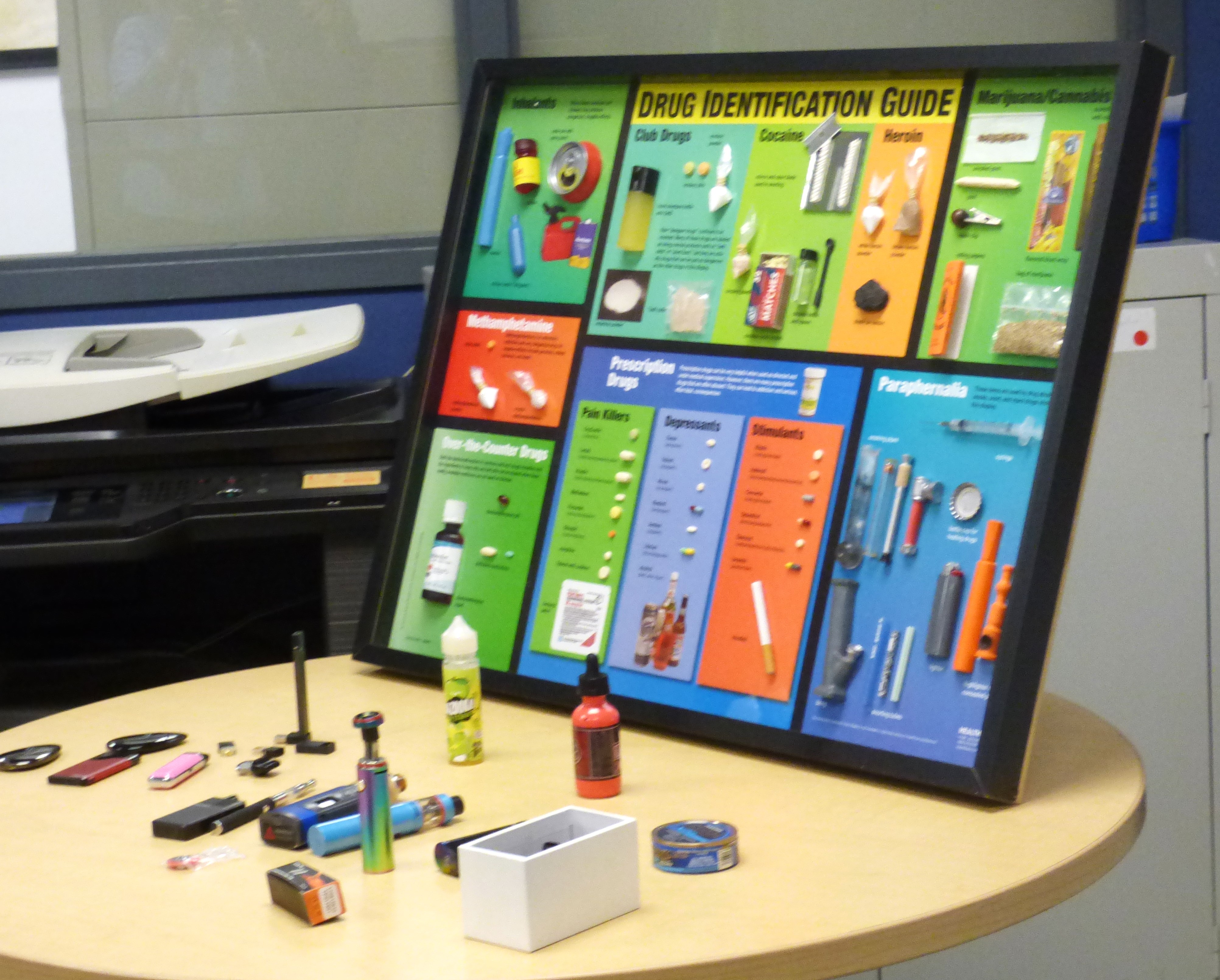
Laesch showed examples of different types of vaping systems, noting that they can be as small as a USB drive and look like pens that fool teachers and parents. Sometimes teens also make a game of trying to get away with using vaping products at school, she said.
She noted that the recent medical issues associated with vaping are very concerning. “They haven’t been around long enough to see the trends, that can take 10, 20 or even 30 years,” she said. “The recent cases have come in initially as respiratory issues and not necessarily associated with vaping at first. Secondhand vaping is also unsafe. More research is definitely needed.”
While nicotine and vaping are not allowed on school grounds, vaping products are often easy to conceal and difficult to detect since they are odorless or smell sweet. She said schools need to update their policies as products and laws change concerning vaping, nicotine and marijuana.
Leave a Reply
You must be logged in to post a comment.