

By DEBRA HAIGHT
BCR Correspondent
NILES – From handling a pickle assault case and a juvenile lifer to civil cases involving General Motors and Harbor Shores, Berrien County Trial Judge Scott Schofield has seen a lot during his 21 years on the bench. He retires this week, the second Berrien County judge to do so this year.
With his retirement as well as that of Judge John Donahue in June, the Berrien County Trial Court will be having some new faces on the bench. Macomb County Assistant Prosecutor and St. Joseph native Gordon Hosbein has already been appointed and another judicial appointment is expected in September to fill Schofield’s seat.
Schofield, 66, a Plainwell native, leaves the bench nearly 21 years to the day he was sworn in. He came to the judiciary after 21 years in private practice with a Niles law firm. He is a graduate of Alma College and the University of Michigan Law School.
“I started 21 years ago on Aug. 29, 1997 which was the day before the Labor Day weekend and I’m leaving the day before this Labor Day weekend,” he said during an interview last week.
“I’m the only judge who has spent time in all three divisions of the trial court,” he noted. “I started in the criminal division, then went to the civil division before going to the drug and domestic violence courts. I spent five years in Niles before going back to St. Joseph to be the presiding judge in the family division and then the presiding judge in criminal.”
Schofield said he made the decision to retire more than a year ago and informed Chief Judge Gary Bruce as he was chief judge pro tem at the time. “I told him so he could make plans,” he said. “He then made Judge Schrock the presiding criminal judge and Judge Berger the chief judge pro tem.”
The life of a judge isn’t an easy one as they’re dealing with people at one of the worst times of their lives, whether they’ve committed a crime, been the victim or are going through a family break-up.
“We deal with trauma every day, sometimes directly such as with the courthouse shooting (that killed two bailiffs two years ago), but most of the time secondarily,” he said. “We listen to people who have gone through traumas and then make difficult decisions … It’s hard to deal with that every day without being affected.”
He learned that the hard way a few years after becoming a judge. “After two or three years as a judge, I ended up in the ER with chest pains,” he said. “It was stress induced. I decided then that I had to be intentional with my self care. I started exercising and making sure I made time for worship, family, good friends and vacations.”
Schofield has brought that intentionality to his work as a judge. “People need to know why they’re being sentenced and why what they did was wrong,” he said. “It’s not because they’re a bad person but that they made bad choices. Everyone makes mistakes and when they do, they need to admit it and prepare to do better in the future.”
As visitors to his courtroom know, he’s big on teaching and telling stories as well as getting people to accept responsibility. When defendants say they want to apologize, he’s been known to say “go ahead” which many don’t understand at first.
“Acceptance of responsibility is important to me, it’s important for them to say ‘I’m sorry’,” he said. “It’s important for them to forthrightly admit what they did. It’s a big deal to me and I believe I’m doing a service to force them to do that, it’s therapeutic.”
Schofield, a member of the Granger Community Church, admits his faith is important to him and has informed his actions. “I understand I’m an agent of the state, but faith must inform what I’m doing,” he said. “Scripture is full of people who made terribly poor choices but who were used by God.”
With 21 years on the bench, only Judge Dennis Wiley has served longer, Schofield has had many memorable cases. Some have been emotional and pitted family members against each other, such as the 2010 murder of Jesse Miles by his teen step-grandson Dakotah Eliason or the 2000 murder of Lisa Fein by her ex-boyfriend, Frank Spagnola.
In the Eliason case, Schofield presided not only over the original trial but Eliason’s
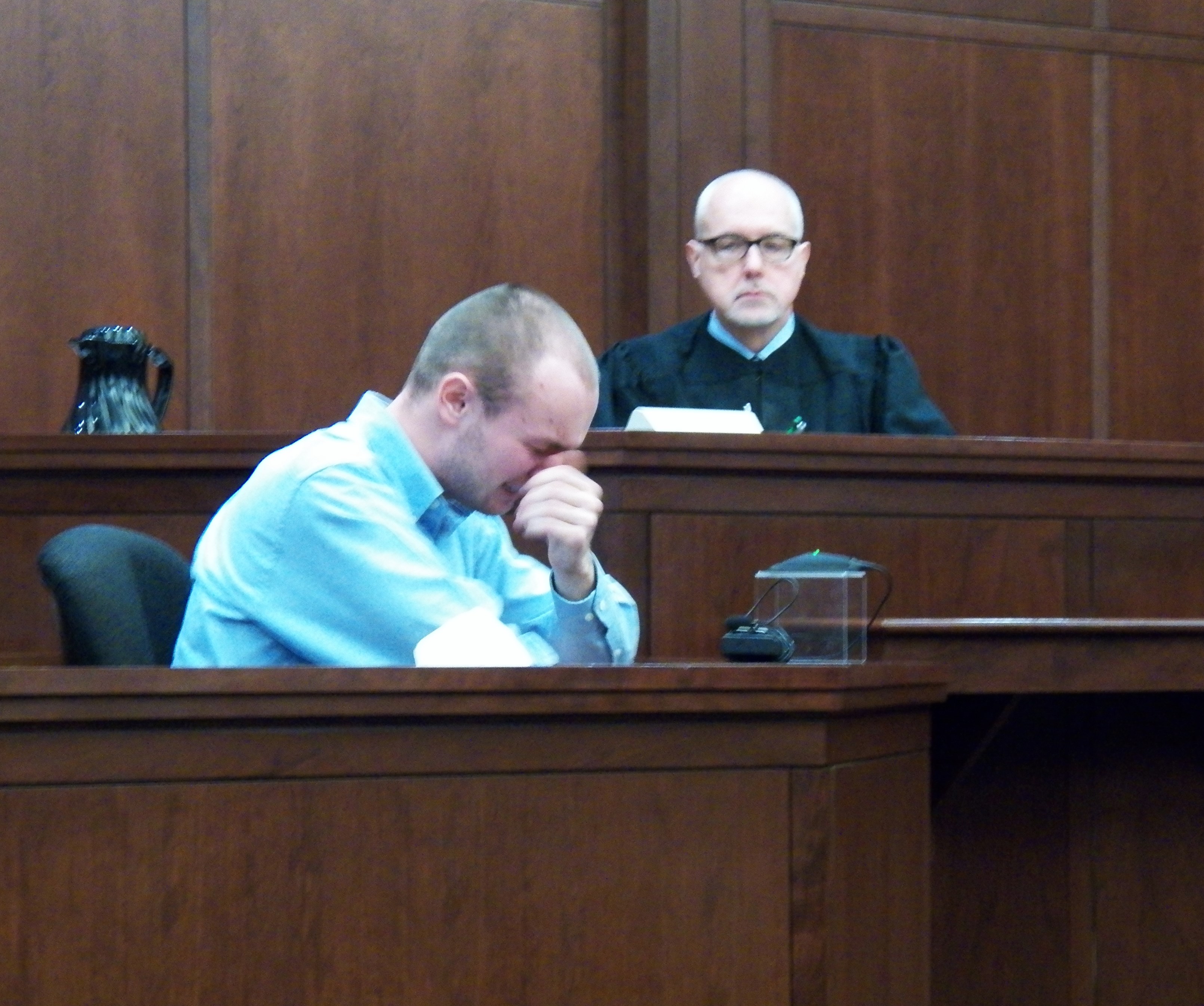
subsequent resentencing after the U.S. Supreme Court ruled it was unconstitutional for juveniles to be sentenced to life in prison without parole. With the Spagnola case, he handled one of the appeals and denied a motion for a new trial.
“With the Eliason case, it was one of the first juvenile lifer resentencing hearings in the state,” he said. “It was a very difficult decision. With the Spagnola case, I heard the motion for a new trial. I felt sorry for the son, his father was convicted of murder and his mother was dead.”
One of the most bizarre was the pickle assault case he handled several years ago. “People treated it lightly and thought it was funny but the defendant beat the victim with a phone after he threw the pickle at him,” he said. “It was on Rush Limbaugh and the AP picked it up. A Whirlpool pilot told me that he saw in a paper in Shanghai.”
Two memorable civil cases he presided over were ones involving the Harbor Shore golf course and a GM product liability case. In the latter, a man was severely injured when his seat belt failed and he won a multi-million dollar verdict.
With Harbor Shores, he said he had a fairly narrow legal decision to make as to whether a golf course can be considered a public park which the Klock family had decreed their land had to be used for. “My job was to decide the legal question, not whether it was a good idea,” he said.
Schofield said he’s made no definite retirement plans. He and his wife, Nancy, have two grown daughters and one grandchild and he said he expects they will do more traveling but still stay active in the community.
“I expect to continue to make a contribution, God still has a purpose for me,” he said. “But it’s time to wind down. From the age of 16, I’ve been either working or going to school and I’ve never had more than two weeks off at a time in 50 years.”
Leave a Reply
You must be logged in to post a comment.