
By: Stan Maddux
Michigan is the 10th state in the nation to legalize recreational marijuana, but selling and using it for now can still mean a trip to the slammer.
According to state officials, recreational marijuana probably won’t become legal until early 2020 because of state regulations that still have to be placed in the books and licenses issued for retail sale of the drug.
After given the legal green light, an individual 21 and older can have as much as 2.5 ounces of marijuana on their possession under Proposal 1 enacted November 6 by a solid majority of Michigan voters.
Each household will be allowed to have up to a dozen plants for personal use only and as much as 10 ounces of marijuana from those plants can be kept as long as it’s stored in locked containers
The measure does permit local governments to prohibit establishments selling marijuana but those communities will not share in the tax revenue.
Employers can still maintain drug free workplaces so workers under such policies are still subject to drug testing and penalties for testing positive, according to the measure.
A 10-percent excise tax will be imposed on each sale along with the current 6-percent Michigan sales tax.
According to the Michigan Senate Fiscal Agency, more than $287 million from excise and sales taxes is projected to be generated annually by 2023.
There also could be a savings.
MSFA found more than $90 million was spent by the state in 2010 enforcing marijuana laws and a vast majority of those arrests were for less than a quarter ounce of the drug.
“This is a victory for sensible marijuana laws,’’ said Matt Schweich, deputy director of the Marijuana Policy Project, one of the leaders in the push for legalizing recreational use of the drug.
The Washington D.C. based MPP is billed as the largest organization that works solely on marijuana policy reform in the U.S.
Under Proposal 1, excise tax monies will be used first to cover implementation and administrative costs incurred from legalization along with enforcement of restrictions.
The next $20 million is directed toward clinical research on the effectiveness of marijuana in treating the medical conditions of former military servicemen and preventing veteran suicide.
Communities and counties where a marijuana business is located will receive 15-percent apiece of what’s left of the tax revenue under the measure.
The remaining 70-percent will be equally split between Michigan’s school aid fund, roads and infrastructure.
Under the measure, recreational marijuana will be regulated like alcohol.
For example, driving under the influence of the drug just like it is alcohol remains a crime.
It’s also against the law under the measure to sell marijuana to a person under 21 and for those under 21 to possess it.
Just like cigarettes, landlords and business owners can prohibit smoking marijuana on their premises and using it in public under the measure is not allowed.
Proposal 1 was supported by 57-percent of the voters statewide.
The margin of victory was higher in places like New Buffalo Township where the vote was 788 to 412.
566 of the 860 votes cast in the city of New Buffalo were also for it,
‘’I don’t think it’s any worse than alcohol so I figured why should they be arresting people and spending all of that money on putting people in jail over nothing,’’ said Ron Rabe after casting his vote at New Buffalo City Hall.
‘’I think the tax money will help. People are using it anyway,’’ said Alan Wakefield also of New Buffalo.
In Niles, the vote to legalize recreational marijuana was 2,123 to 1,293 while Niles Township was 2,657 to 2,436 in favor of it.
Buchanan voted 839 to 598 in support.
In terms of ratio, support was highest in Benton Harbor where the outcome was 1,718 to 569.
2,439 voters in St. Joseph were for and 1,649 against.
Support also outweighed the opposition in Three Oaks Township by 688 to 450; Galien Township by 313 to 257 and 557 to 460 in Bridgman.
Voters in 13 of the 32 local governments in Berrien County were opposed.
The vote against was 668 to 604 in Buchanan Township and 622 to 609 in Bertrand Township.
Opposition also came from Lincoln, Royalton, Lake, Baroda, Oronoko, Berrien, Sodus, Pipestone and Bainbridge townships.
Brian Thompson of New Buffalo did not disclose his vote on Proposal 1 but
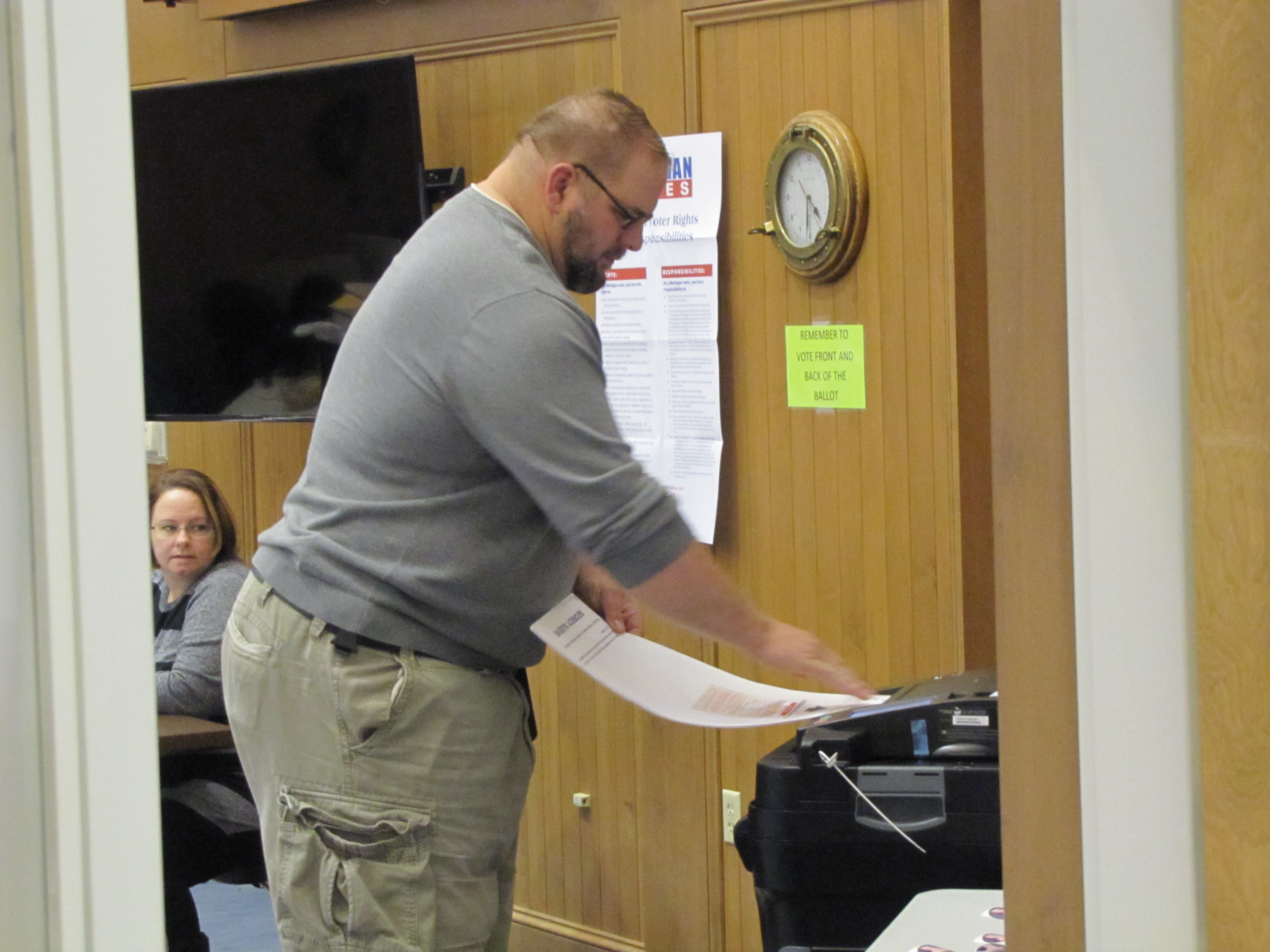
he expressed concerns like driving impaired possibly going up.
‘’I expect traffic accidents will significantly increase,’’ Thompson said.
Michigan is the first state in the Midwest to legalize marijuana for recreational purposes.
The rest are Colorado, California, Nevada, Washington, Oregon, Massachusetts, Vermont, New Hampshire and Maine.
Leave a Reply
You must be logged in to post a comment.