
By DEBRA HAIGHT
BCR Correspondent
BUCHANAN – Infrastructure projects and concerns are on the front burner for Buchanan city officials. In addition to approving items related to the upcoming $18 million downtown streetscape and infrastructure project, officials are dealing with a sewer overflow into McCoy’s Creek that occurred July 8.
Buchanan City Manager Tim Lynch reported that the sewer overflow occurred July 8 near Third and Dewey Streets and that steps are being taken to inform state and county agencies as well as the public. He said the source appeared to be the influent sewer line into the Buchanan Wastewater Treatment Plant.
He said that Michigan EGLE and the Berrien County Health Department were contacted. The Health Department is working with the City in performing sampling and analysis of the creek waters in the impacted area. The area adjacent to the overflow has been posted to prevent human contact and recreation until further notice.
Lynch said this week that the overflow was stopped the following day with the installation of bypass pumping equipment. The damaged pipe is scheduled to be repaired this week and the bypass pumping equipment removed.
He noted that signs that people are seeing near the creek and the adjacent trail are related to the sanitary sewer overflow and the associated pipe failure. The signs were put up as a precaution and will be removed when the pipe repairs are completed and everything is returned to normal operations.
Last week, Buchanan City Commissioners approved three resolutions related to the USDA loans the city is getting, as well as the contract for the first part of the infrastructure work. Background on the project and the USDA loans had been presented to the commission at their June 24 meeting.
Lynch said two resolutions were approved for the water supply system part of the project and one for the sewer system part of the project. The two water system loans total nearly $9 million, while the sewer system loan is for nearly $7.5 million. Each was for the issuance of additional junior revenue bonds.
U.S.D.A. Rural Development is giving the city 40-year million low interest loans from U.S.D.A. Rural Development to pay for most of the $18.2 million project with the rest coming from the general and water and sewer funds. The interest rate on the loans is 1.375 percent, a lower rate than most interest rates available.
The project will pay for improvements to the aging water and sewer systems to replace pipes installed a century ago and a new interceptor to the wastewater treatment plant as well as streetscape work on Front, Main and Oak Streets, Red Bud Trail and Days Avenue.
The commission also approved the first contract for the streetscape project at last week’s meeting. Kamminga & Roodvoets Construction of Grand Rapids. That contract is for $10.53 million and will be formally signed after the U.S.D.A. paperwork is completed.
Lynch said work should start after Labor Day from the treatment plant and then on Third Street to City Hall. That part of the project includes crossing McCoy’s Creek and will be done this fall before the state stops work around the creek for the November-May spawning season.
Commissioners also got a construction update about the new Department of Public Works building from Jennifer Sawyer of the Barton Group who oversees the construction. Lynch said the nearly $5 million project is expected to be done by Aug. 30.
In other business, commissioners approve a new liquor license for the boutique hotel going in on Days Avenue in the former livery stable building. Commissioner Patrick Swem abstained as he has a business interest in the project.
Commissioners in May–again with Swem abstaining–approved a 12 year obsolete property rehabilitation tax break for the $3.5 million project. Developer Michael Reed said then that they hope to be open next spring and have 10 rooms as well as bar and facilities.
Community Development Director Richard Murphy said then that the project is in line to get a $1.2 million state grant to go toward the costs of rehabilitating and renovating the property. 50 short term construction jobs are expected to be created as well as 20 long term jobs.
Murphy said Monday that the boutique hotel project is an example of old downtown buildings coming alive with multi-million dollar investments. He said getting the state grant shows that the state recognized it as a “downtown game changing project.”
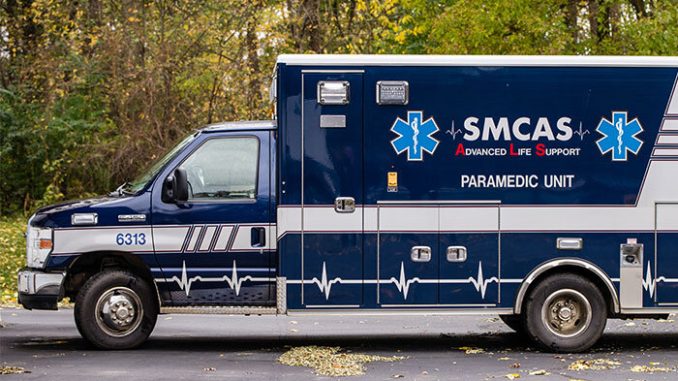
There was much discussion but no action on the agenda item related to amending the Southwestern Michigan Community Ambulance Service articles of incorporation. Commissioners postponed action on the matter and then voted to ask the city attorney to look over the proposed amendment.
Commissioners raised concerns about the absence of SMCAS Executive Director Brian Scribner from the meeting after he had promised to be there. They said that it was the second or third time that Scribner had said he would come but didn’t show up.
Commissioner Patrick Swem pushed for the review by the city attorney. “One of the things I’d like to see is to have our attorney review the bylaws and see if there is any way we can [ask] SMCAS if it continues to spiral to be a mess [whether] we will have the opportunity to change course,” he said.
Swem said he was concerned about how SMCAS is expanding more into Cass County and spending money there, which he said “really rubs me the wrong way.” There was no communication about it to member municipalities. He also noted that municipalities don’t approve the SMCAS budget and that SMCAS “randomly” sends out bills to municipalities.
“We need an ambulance service but is SMCAS the right one?” he asked. “That’s a conversation we need to start having with the county longterm.”
Fellow commissioner Larry Money said that he’s been sitting in on the SMCAS board after Tim Ganus’ retirement. He said there’s been a lot of confusion with the expansion into Dowagiac and other parts of Cass County.
Commissioner Dan Vigansky said he thinks there’s a management problem at the ambulance service. He described SMCAS as being a “debacle” for 10 to 20 years. He voted no on having the city attorney review the bylaws, asking why city taxpayers should pay for the attorney to look into it when people know what the problem is.
Leave a Reply
You must be logged in to post a comment.