

By DEBRA HAIGHT
BCR Correspondent
NILES – There was more action last week in Berrien County Trial Court in the case of the Buchanan man who allegedly drove drunk and killed a Berrien County Road Department worker nearly two years ago. The trial for Taylor Ryan Johnson is set to go to trial in early June.
Whether or not the trial starts then depends on whether his attorney’s intent to appeal rulings made late last week by Berrien County Trial Judge Jennifer Smith is allowed to move forward. Defense attorney Jessica LaFond said Monday in court that she intents to file a motion to stay the proceedings as she appeals the judge’s rulings.
With the trial for Taylor Ryan Johnson on a charge of operating a vehicle while intoxicated causing death currently scheduled to start June 4 at the Niles courthouse, it is expected that Judge Smith will rule quickly on LaFond’s motion to stay.
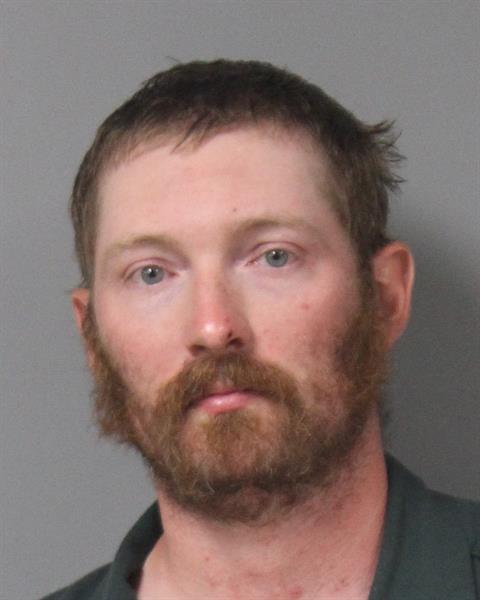
The July 20, 2022 incident on Red Bud Trail in Oronoko Township took the life of road department worker William “Mack” Isom who was trimming tree branches in the roadway. If convicted, Johnson faces a maximum penalty of 15 years in prison and a fine of up to $10.000.
The preliminary breathalyzer test (PBT) administered after the accident showed a blood alcohol level of over .19 which is more than twice the legal limit, a level confirmed later with a blood test.
Defense attorney Jessica LaFond argued three motions last week to suppress the preliminary breathalyzer test results, suppress evidence based on an illegal search and statements made by Johnson before he was formally arrested. Judge Smith ruled against the first two motions Thursday and the last one Friday.
LaFond said she intends to file a motion to stay the proceedings as well as for leave to appeal two of Judge Smith’s rulings. She said if an appeal is going to cause a delay in proceedings, a motion to stay has to be filed. If Judge Smith denies the motion to stay the proceedings, she would then try to get the Michigan Court of Appeals to grant a stay.
LaFond noted that there are very significant Fourth Amendment issues that need to be resolved to ensure Johnson has a chance at a fair trial. She wants to appeal Judge Smith’s two rulings made Thursday and not the alleged Miranda warning violation ruling made Friday.
With the first motion, LaFond claimed that the PBT results be thrown out because he was not given the choice of refusing the test, refusing a PBT is a civil infraction. She called the PBT an illegal search and that police would not have had reason to arrest Johnson without the test since he passed a field sobriety test.
Judge Smith and Assistant Prosecutor Jerry Vigansky disagreed. Vigansky said Johnson wasn’t under arrest at the time and a search warrant wasn’t needed to do the PBT. Judge Smith concluded that she found no case law that says a PBT can’t be given unless consent is asked for and the person told he can refuse.
With the second motion, LaFond claimed that the search of the electronic data record of Johnson’s car was done illegally since the affidavit asking for the search warrant did not mention any alleged criminal activity. Judge Smith acknowledged that the affidavit for the search warrant could have been better written but that it was sufficient to get the warrant.
The last motion was to suppress statements Johnson made to police before he was read his Miranda rights which informs people that statements they make can be used against them.
That motion was the subject of a Walker hearing Thursday in which Johnson was the only one to testify. A Walker hearing is held to determine whether a defendant’s statements were made voluntarily and can come into evidence.
Johnson testified that he felt threatened after a police officer put him in the back seat of a police car and that he couldn’t leave. He said he was not read his Miranda rights until he arrived at the hospital even though he had been handcuffed and questioned by police.
She said the question of whether a person is in custody when he is in the back of the police car depends on whether a reasonable person feels like he could leave. Vigansky disagreed, saying that roadside questioning is an exception to the Miranda rule.
Judge Smith said the law states that just being in the back of a police car doesn’t constitute being in custody. Friday, she went further into her analysis before issuing her ruling. She said while Johnson was placed in the car and questioned, he was not initially handcuffed, was in public view and not told he was under arrest.
“It was a brief investigatory stop and detention to confirm if a crime had been committed,” the judge said. “It didn’t move into a coercive environment and it was not required to read him his Miranda rights.”
The Johnson case has been delayed a number of times since the time of the incident in 2022. The most recent adjournment came last summer when Johnson and his attorneys appealed a decision by Judge Smith to exclude evidence about Isom’s alleged negligence and using it as a defense at trial.
That decision was appealed to the Michigan Court of Appeals and then the Michigan Supreme Court with both courts denying to hear the appeal. The most recent appeal denial came in early January when the Michigan Supreme Court declined to take up the appeal.
Leave a Reply
You must be logged in to post a comment.