

By DEBRA HAIGHT
BCR Correspondent
BERRIEN SPRINGS – Southwest Michigan’s federal and state legislators gathered last week in Berrien Springs to share updates with area school officials. The Berrien Regional Education Services Agency annually hosts a legislative breakfast to give people the opportunity to meet and network with legislators.
Legislators attending the breakfast were U.S. Rep. Fred Upton, State Sen. Kim LaSata and State Reps. Aaron Miller, Brad
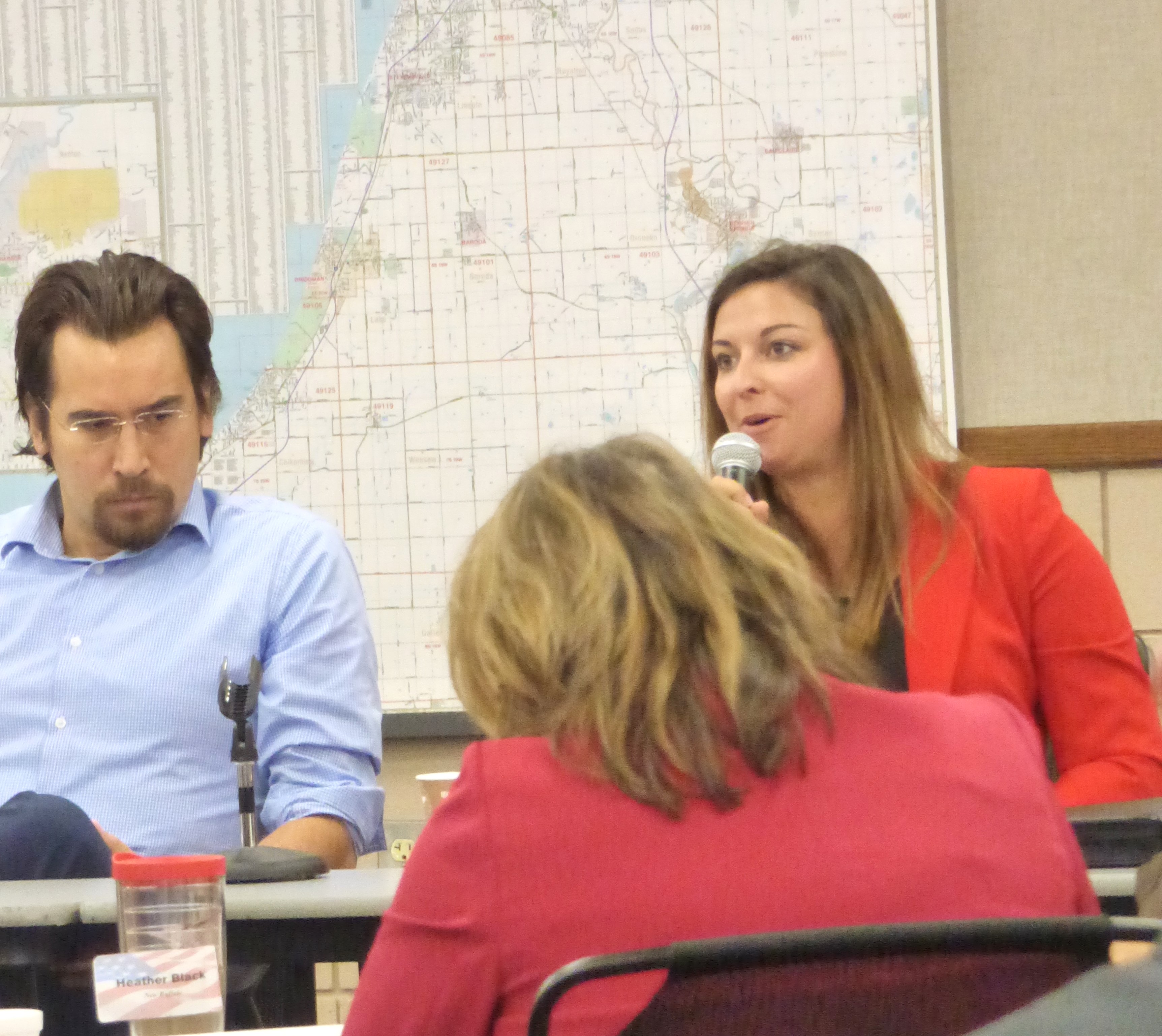
Paquette and Pauline Wendzel. School board members and school superintendents were able to ask education related questions on a range of topics.
Although it didn’t come up during the breakfast, Upton took time afterwards to comment on the current impeachment inquiry in Congress. He had made the news the previous week when he said he felt there were “legitimate questions” that need to be answered concerning claims about a July conversation between President Donald Trump and the Ukrainian president.
Upton stood by the comments he made the week before in Detroit about impeachment efforts against President Donald Trump although he continued to maintain that he doesn’t support an impeachment inquiry against the president.
“The committee is asking a lot of questions and is getting a lot of information,” he said.
Upton would not comment when asked about his views on how Democrats have conducted the inquiry so far and whether there should be a House vote on impeachment as President Trump has called for. He said that he’s been back here in Southwest Michigan the last two weeks and his “focus is here.”
As for whether he will run for re-election in 2020, he said he hasn’t decided yet. He noted that he didn’t decide until November, 2017 before the November 2018 election that he wouldn’t run for the U.S. Senate against Debbie Stabenow.
“We’re checking all the boxes and doing all we need to do to make a decision,” he said. “There’s no timeframe, I don’t want to get in the campaign mode too early. My job comes ahead of a campaign and I’m not ready to make a decision yet.”
Back to the education forum, Upton and state legislators said that while the federal and state governments can do more to help local school districts, they can’t do everything and local districts should have more autonomy to do what’s best for their communities.
For example, legislators all spoke in favor of more local control including over the school calendar. “School boards, superintendents and parents should decide when school should start in the fall,” LaSata said. “We should just let the locals decide, the state doesn’t have to mandate everything.”
Several people asked questions about the state of education funding including how to keep the School Aid Fund just for K-12 public school districts. While intentions were to earmark tax revenue under Proposal A solely for public schools, legislators since then have decided that money from that fund can also go to private schools and community colleges.
“It does say higher education is included as part of school aid in the state constitution,” Miller said. “I’m all in favor of changing the constitution so there’s a firewall to get higher education funding out of the school aid fund. We need to change the constitution and it’s not something that can be done lightly.”
LaSata had a somewhat different take on the issue. “I’m trying to protect as much money as we can for higher education instead of it all coming from the general fund,” she said.
Miller, who will be term limited in 2020, said that term limits are part of the problem in trying to solve long term problems such as the continuous changes being made to the Michigan Merit Curriculum. “The chief deterrent to consistency is term limits,” he said. “The problem in doing anything in the legislature is a lack of institutional knowledge.”
School safety was another issue legislators were asked about, including expanding the OK2SAY emergency hotline program so that local and county law enforcement officials get the information as well as the Michigan State Police.
Upton said he favored a number of efforts including “red flag” laws which identify people with potential problems and take their weapons after interviews and hearings. He noted that other states like Florida and Indiana have approved red flag laws and added that Congress have increased funding for mental health and school safety programs.
“I talk about the culture found in schools,” Paquette, a former teacher himself, said. “It’s about more that having metal detectors and school resource officers that make students feel like they’re in jail. We need to bring more safety measures without making people feel like they’re in jail.”
All five legislators said they supported efforts to spend more on English language learners, economically disadvantaged, special education and career technical education programs. Upton noted that President Trump signed the Christa McAuliffe Commemorative Coin Act last week where part of the proceeds go to FIRST Robotics programs.
Wendzel said more needs to be done to fund CTE programs that train students for the jobs already available here. “I signed up for this gig but I have friends who moved away because they couldn’t find work here,” she said. “It starts with transportation and affordable housing. It’s going to be a long process but we’re working on it.”
The state legislators all expressed frustration over Gov. Gretchen Whitmer’s recent line item vetoes of education related items including money for reading and career technical education programs.
Leave a Reply
You must be logged in to post a comment.