
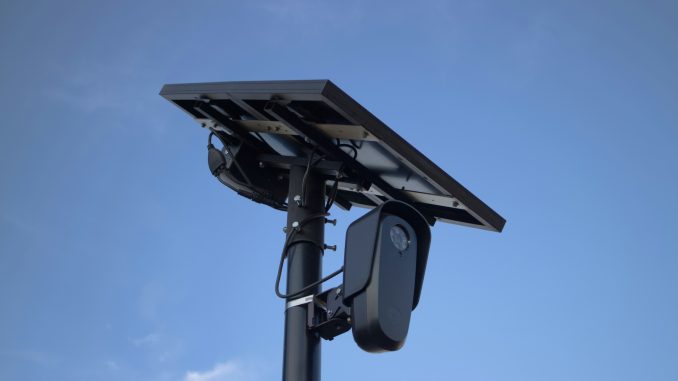
By DEBRA HAIGHT
BCR Correspondent
ST. JOSEPH, MI – Last week’s board meeting also featured a discussion of the use of Flock surveillance cameras in the county. Flock cameras have come under scrutiny both here and around the country as people are concerned about the cameras, what information they collect and how the information gathered is used.
County Commissioner Jon Hinkelman said the finance committee had discussed the issue at their meeting last week prior to the county board meeting.
“We dialogued about it in finance,” he told fellow commissioners. “We’re getting a number of people requesting more information about them. We would ask for update from the Sheriff’s Office on what Flock cameras actually do and how they fit into any future AI policy for the county.”
Flock cameras are license plate readers. The company uses them to track vehicles’ license plates, models, makes, and colors so authorities can search a database for the exact movements of any car anytime it is picked up by a camera. Law enforcement officials have come under scrutiny for misuse of the system.
Hinkelman said it’s a discussion he thinks the full board should have, noting that both commissioners and residents are not familiar with what they do, the information accumulated and where the information is sent.
Administration Committee Chairman Jim Curran said it’s a topic his committee has also discussed. Both he and Commissioner Chokwe Pitchford said they’d like to get more information on how the Flock cameras are used and what happens to the information collected.
“I agree with Jon and Jim, I think it would be a smart thing to do,” Pitchford said. “I would love to get more information.”
“We forward the email we got to the Sheriff and they would like to handle the response to that email and maybe make a presentation to the Committee of the Whole on how works,” Curran said. “There are a lot of positive things the cameras do and we talked about the importance of getting the positive message out.”
Elliott gave his perspective on the issue as a practicing attorney.
“The legal framework is important,” he said. “I hear expressions of concern about personal privacy and when you are on a public street, the expectation of privacy is not the same as when you’re sitting in your home. Privacy protections in home are almost baked into the Constitution.”
“But privacy rights are different if you’re driving your car down the street,” he said. “The expectations of privacy are not the same. Police can ask all sorts of questions they couldn’t ask if you were sitting on your sofa in your living room.”
“If you’re driving down the street, you’ve granted implicit rights of cameras, license plate reader and other equipment to monitor,” he added. “The Supreme Court has made it clear that you don’t have the same rights driving down the street as you do sitting in your living room … Keep that in mind. Lots of things can grow legs and start running that aren’t necessarily based on fact or law.”