

By Debra Haight
NILES – One of the area’s longest serving police officers is hanging up his hat this summer. Detective/Sergeant Fabian Suarez will retire from the Michigan State Police in early August after 29 years, the last 18 at the Niles post.
Suarez began his state police career in Sandusky, Mich. after spending eight years in the Army. He was then transferred to Ionia before coming to Niles. He worked in undercover narcotics and became a detective in 1999.
He is a native of Texas but spent much of his youth in Ludington when his family settled there after spending years doing migrant farm labor. He said he was first interested in police work after seeing a state trooper bring his family a Christmas basket one year. “I loved that and after that I always wanted to do it,” he said.
Suarez’s tenure in Niles has included work spent on some high profile cases such as the murders of Carolyn and John Tarwacki and teen Dakotah Eliason’s murder of his step-grandfather, Jesse Miles, both cases in 2010. Eliason was arrested and charged right after the incident while Keith Lintz wouldn’t be arrested in Tarwacki case until nearly three years later.
It was Suarez’s involvement in the solving of the Tarwacki murders that led to his
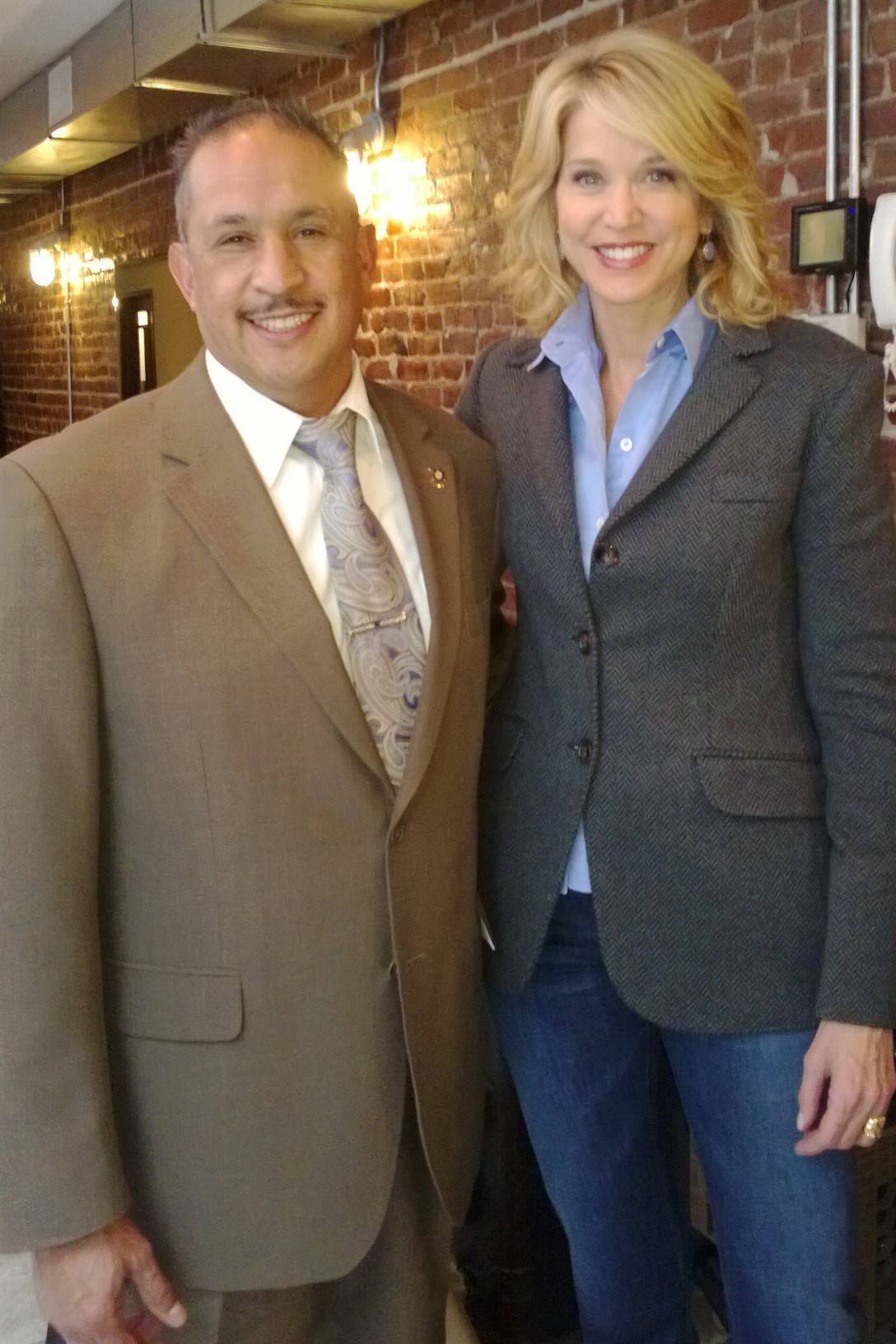
appearance on two Discovery Channel television shows. “On the Case with Paula Zahn” featured the case in early 2014, while “Murder Comes to Town” highlighted it in early 2016. Suarez was interviewed for both shows.
“It took us three years to solve the case,” Suarez said. “We had several suspects initially but they would be eliminated and we’d be back where we started. A case like that takes a toll on you as you investigate along with the family. What we went through was nothing like what the family went through.”
He noted that the case was always on his mind in the years before Lintz’s arrest and he’d sometimes go into work at 2 a.m. when he couldn’t get to sleep because he couldn’t stop thinking about. They interviewed over 300 people, followed up on 800 tips and traveled as far away as Tennessee to talk to witnesses.
“With the Tarwackis, they’re such good people, you want to work even harder for them,” he said. “… You live through it with the family. I still try to talk with Sharon (McKnight, Carolyn’s mother) when I can. In this line of work, you find family and make good friends.”
He said being a detective requires both an interest in solving puzzles and a desire to fight for justice. “As corny as it may be, I say that I work for the victim and work for God,” he said. “I work mostly for the victims and getting them some sort of satisfaction and I don’t want to see people get away with a crime.”
The Tarwacki case is one he has highlighted when he’s taught at the state police’s homicide school. “I teach them about pursuing all the leads and eliminating suspects and tracking down all the neighbors,” he said.
“I also talk to them about mistakes like the fact we didn’t look in the freezer and find the knife hidden there until months later. I tell them to never release a crime scene until they’re 100 percent sure they’ve searched everything. It didn’t hurt us in the Tarwacki case but it made us look silly.”
His career as a detective has also included work on cold cases. He’s been able to solve a number of cold cases over the years but will leave with others like the murders and disappearances of Shirley Pullen, Janice Sanders and Roxanne Wood still unsolved.
Cold cases he was able to solve include the 1998 Eric Baich murder and the Harley Whittaker murder over 30 years ago. Suarez said cold cases are different in that there’s not as much of a rush to make an arrest and a new detective brings fresh eyes to a case. The passage of time can be both problematic with people forgetting things and helpful when people no longer keep secrets.
“The difficulty is that people are older and may have moved or changed their name,” he said. “But marriages and friendships break up and maybe some are more willing to talk. With cold cases, you may knock on a door and people will say they thought you’d come some day.”
When asked what he’ll miss, Suarez said he will miss the challenge of investigating and solving crimes but won’t miss going to crime scenes or making family notification calls.
“I will miss the challenge but it will be nice to not have to go to violent crime scenes and I won’t miss being on call 24 hours a day and having to knock on people’s door to tell them their loved one is dead,” he said. “I’ve seen a lot of sadness over the years. I hope I can let it all go. Others say that eventually you let it go and purge your mind.”
As for his retirement plans, he said he and his wife will likely move south at some point as they have children who live in Tennessee and relatives in Texas.
Leave a Reply
You must be logged in to post a comment.