By DEBRA HAIGHT
BCR Correspondent
BUCHANAN, MI – Marijuana revenue numbers for 2025 have been released by the State of Michigan. Several Berrien County communities with marijuana businesses are among those around the state receiving a share of nearly $94 million in marijuana tax revenue.
The cities of Buchanan and Niles are among those getting marijuana revenue in 2025. Each have 6 marijuana businesses and will receive $324,102.60. Two communities–Benton Township and Eau Claire–have 1 business each and will get $54,017, while the city of Benton Harbor has 5 marijuana businesses and will get $270,085.50.
One Berrien County community, New Buffalo Township, has 26 marijuana businesses and is scheduled to receive $1,404,444.60. Berrien County is getting $2,592,820.80 as their share of the marijuana tax revenue.
A total of 114 cities, 39 villages, 81 townships, 75 counties, and four tribes will receive payments from the Marijuana Regulation Fund, according to a state press release. The full listing of communities receiving marijuana revenue this year can be found on the Michigan Department of Treasury’s website.
This year, each eligible municipality, county, and tribe will receive $54,017.10 for every licensed retail store and microbusiness located within its jurisdiction. That amount is down from 2024 when each eligible entity received over $58,200 for each licensed marijuana business.
State law outlines how much is distributed to local entities, tribes, schools, roads and bridges, with 15% going to municipalities and Indian tribes in which a licensed marijuana retail store or microbusiness is located.
Another 15% goes to counties and Indian tribes in which a licensed marijuana retail store or microbusiness is located, while another 35% goes to the School Aid Fund to be used for K-12 education. The final 35% of the revenue goes to the Michigan Transportation Fund to be used for the repair and maintenance of roads and bridges.
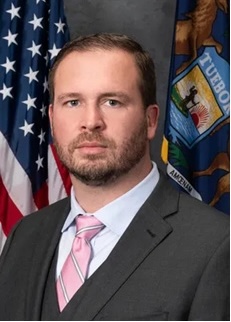
Meanwhile, State Sen. Jonathan Lindsey has introduced legislation to repeal the marijuana tax created last fall during state budget negotiations. The legislature and governor approved the new 24% wholesale marijuana tax to fund road repairs.
“I opposed the new tax increase, first and foremost, because it represents an unnecessary growth of government,” Lindsey stated. He is from Coldwater and represents the 17th state senate district, which covers part of Berrien County along with other southern Michigan counties.
“Lansing’s budget does not need to grow larger; we simply need better discipline,” Lindsey said. “This tax will also damage Michigan businesses and lead to widespread job losses across the state, which are already being reported.”
“I also don’t believe that in the long term this mechanism will generate the expected revenue, especially if sales go down as a result of the increased taxes or if legal challenges against the tax prevail.”
The bill he has introduced, Senate Bill 810, would repeal the new 24% wholesale tax and revert marijuana taxation to the structure set by the vote of the people.
“This is about reining in the government’s constant attempt to get just a little bit more out of people,” Lindsey said. “Lansing must realize that growing government by taxing businesses into oblivion has never been, and will never be, a way to encourage a healthy Michigan economy.
“My bill has strong bipartisan support, with 4 Republican co-sponsors and 3 Democrat co-sponsors, and I only expect support to grow as the damage of this tax becomes more obvious. I hope my colleagues don’t wait too long.”
The bill was referred to the Senate Committee on Government Operations.
State Rep. Brad Paquette, Niles, said he didn’t support the wholesale marijuana tax last fall either but isn’t sure that Lindsey’s effort will bear fruit. He noted that he opposed the tax increase even though he opposed the legalization of marijuana previously. He said the new tax hurts businesses in Southwest Michigan and around the state.