

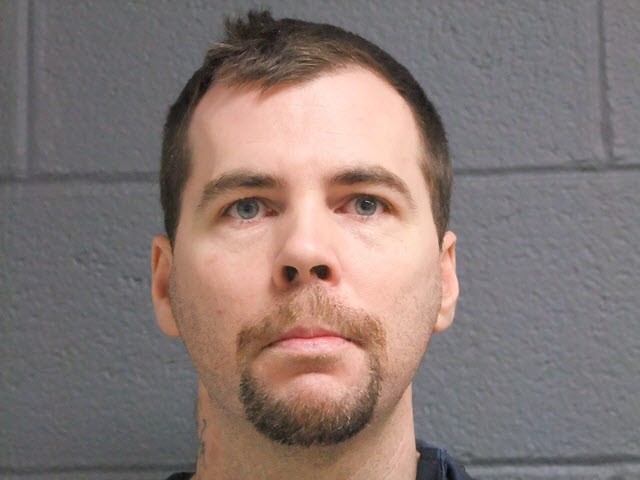
 NILES – The 2015 criminal sexual conduct conviction of a Niles man for sexually molesting a young girl has been overturned by the Michigan Court of Appeals and Berrien County Prosecutor Michael Sepic has decided not to retry 38 year old Derrick Gregg Walden.
Walden had been scheduled to be retried on one count of first-degree criminal sexual conduct in late May in Berrien County Trial Court. He had been convicted at the end of a 2015 jury trial of one count of criminal sexual conduct against an eight year old girl. He was found not guilty of another count against the same girl.
Walden was freed from jail in early May after Berrien County Trial Judge Angela Pasula dismissed the case against him. Berrien County Trial Judge Dennis Wiley had presided over the original trial in early 2015.
Walden said that the dismissal of the case came as a bit of a surprise to him but he had already vowed to fight even if it took going through a second trial.
“When I got back to Berrien County in January, the prosecutor offered me a plea deal to a lesser charge with credit for time served but I turned it down,” he said. “I would have still been a registered sex offender and I would have had to tell my kids that I was a sex offender. I decided to keep on going.”
Walden’s nightmare began in September 2014 when he was arrested on two counts of first-degree criminal sexual conduct against a child under age 13. The incident had occurred in July 2014 at his home. The alleged victim was an eight year old girl not related to him, whose family was visiting the home.
A jury trial in early 2015 ended with the jury convicting him of one count and finding him not guilty of the other count. He was sentenced to the mandatory term of 25 years in prison on April 20, 2015.
Sepic said his office had intended to retry the case but ran into “double jeopardy” problems stemming from the original jury verdict that found Walden guilty of one count and not guilty of another. The two counts were for incidents at two locations in the home but they had each been charged generically without specifics.
“The counts were not specifically identified to specific rooms and the victim testified both ways in terms of which incident came first,” Sepic said. “We couldn’t find a theory to show he was guilty in one room and not in the other, it would be double jeopardy … Our position is that we’re dismissing it not because we don’t believe he didn’t do it but because of the double jeopardy problem.”
As for the Court of Appeals ruling, he said his office still believes that any errors made were harmless and not significant enough to overturn the verdict. “Reversals are usually because of an error but it may not have looked like an error during the trial,” he said.
Walden’s appellate attorney, John Moritz of Holland, had a different take on the Court of Appeals ruling. “If he’d had a fair trial, he would have been found not guilty of both counts,” Moritz said. “Mr. Walden and his attorney were prevented from presenting evidence … After reviewing the trial transcript, there was no question in my mind that it had to go to the Court of Appeals.”
Moritz said he’s been an attorney for over 30 years and found the number of errors made during the course of the trial to be very unusual. He put the number of errors he found as close to a dozen, although the Court of Appeals focused only on one or two.
After his release from jail, Walden said he was glad to be out of prison but still doesn’t have faith in the criminal justice system. “This should have never happened in the first place,” he said. “It’s easy to allege, it’s hard to disprove … I wonder who else this has happened to.”
“I can’t believe it’s finally over and it took so long,” he said. “Right now I’m trying to re-adapt and get re-acquainted with my kids,” he said. “Hopefully I can start moving on with my life.”
The Court of Appeals ruling took exception to Judge Wiley’s decision to allow rebuttal testimony offered by the prosecutor toward the end of the trial. He allowed a forensic interviewer to introduce hearsay evidence claiming that Walden’s own young daughter had said he had molested her.
Wiley would not allow the defense to call a Department of Health and Human Services investigator to counteract the forensic interviewer’s statements. The investigator had investigated the Walden home after the incident and allowed his children to be returned to him.
The Court of Appeals concluded that the error in admitting hearsay evidence was not harmless as the jury heard it just prior to the closing statements and deliberations.
“Accordingly, we cannot discount the likelihood that the testimony that the defendant had sexually abused his own own daughter likely influenced the jury to conclude that even if it did not fully believe the victim’s testimony, defendant was the type of man who sexually abused children making him worthy of punishment even in the face of reasonable doubt as to the charged crime.”
Leave a Reply
You must be logged in to post a comment.