
By DEBRA HAIGHT
BCR Correspondent
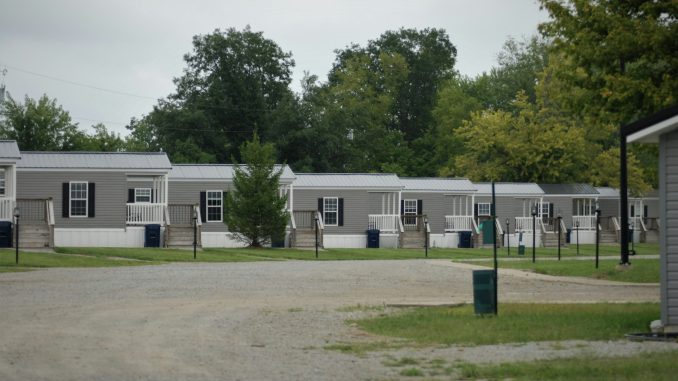
BERRIEN SPRINGS, MI – Residents from the River Grove mobile home park on the St. Joseph River learned more about their rights last week at a “Stand Up For Your Rights” workshop at the Berrien Springs Community Library. Attorneys from Legal Aid of Western Michigan and a representative of MH Action were on hand to answer questions for the residents; the park was the site of major flooding seven years ago and some of the damage from that time period has never been repaired.
Legal Aid attorneys Tricia Hagman and Anthony Dopp were the primary speakers at the workshop which was attended by over two dozen past and present River Grove residents. They both work out of the Legal Aid office in St. Joseph and have represented River Grove residents in eviction and other matters in Berrien County Trial Court.
Paul Terranova of MH Action also spoke. He reminded people of the work his organization, Manufactured Housing Action, has done to advocate for the rights of mobile home residents and to promote new state and federal legislation.
While it is still pending in Lansing, if passed the legislation would stop rent and fee gouging, establish transparency with utility charges, protect people from unfair and deceptive leases, require notices be sent when leases are about to expire, and allow people to have yearly leases rather than month to month ones.
Terranova told the people attending the event that the law is weak when it comes to protecting the rights of mobile home residents. He urged residents to band together to fight for their rights in order to have a better chance of winning whether it’s in court or with other governmental agencies.
“There are ways to win on the issues and it’s easier if there’s a team working together,” he said.
He noted that the laws in Michigan regarding mobile home parks haven’t changed since 1987. “We’ve met with 114 state legislators in the last year and a half and most say they had no idea of the problem with mobile home parks,” he said. “The biggest way to give away your power is to believe you don’t have any.”
Park owners must offer leases to those who don’t own their own mobile homes and the leases must spell out information such as the property address, the lot number, when rent is due and the name and contact information of both the landlord and the tenant, they said.
Those who own their mobile home must still pay lot rent and expect the property owner to maintain the infrastructure, they added.
In every instance, the attorneys urged people to keep copies of their records including when they notify the landlord about problems and also take pictures of conditions. What people should not do is make repairs on their own and then deduct or withhold rent without contacting an attorney.
Utility charges continue to be a big concern for the residents. The attorneys said that the law states that charges for water have to be accurately measured. As with everything else, they said that people need to keep records to prove their case about utility charges.
As for when an eviction related issue ends up in court, they said the process includes the issuance of a complaint, service on the tenant, two to three hearings, a trial and then a judgment. The park can start eviction proceedings in seven days for non-payment of rent and in 30 days for other termination of tenancy issues.
Non-payment defenses include failure to make repairs, the landlord breaching the lease, and the landlord’s interference with the tenant’s enjoyment of his property. The property owner/landlord can file for non-payment evictions if the tenant fails to make a payment in three out of 12 months.
The attorneys said that the law treats mobile homes differently than it does other types of housing. Titles to mobile homes are more similar to titles to motor vehicles than they are titles to other homes. A common title issue involves titles never having been registered and transferred from past owners.
The speakers offered a number of resources for people to draw on as they try to get help for their situations. They listed a number of state agencies that handle water and sewage problems, title problems, and construction code issues.
As for legal assistance, they gave out the websites for Michigan Legal Help and Legal Aid of Western Michigan. Those websites arewww.MichiganLegalHelp.org and www.lawestmi.org. The website for Terranova’s organization is www.mhaction.org.