
By DEBRA HAIGHT
BCR Correspondent
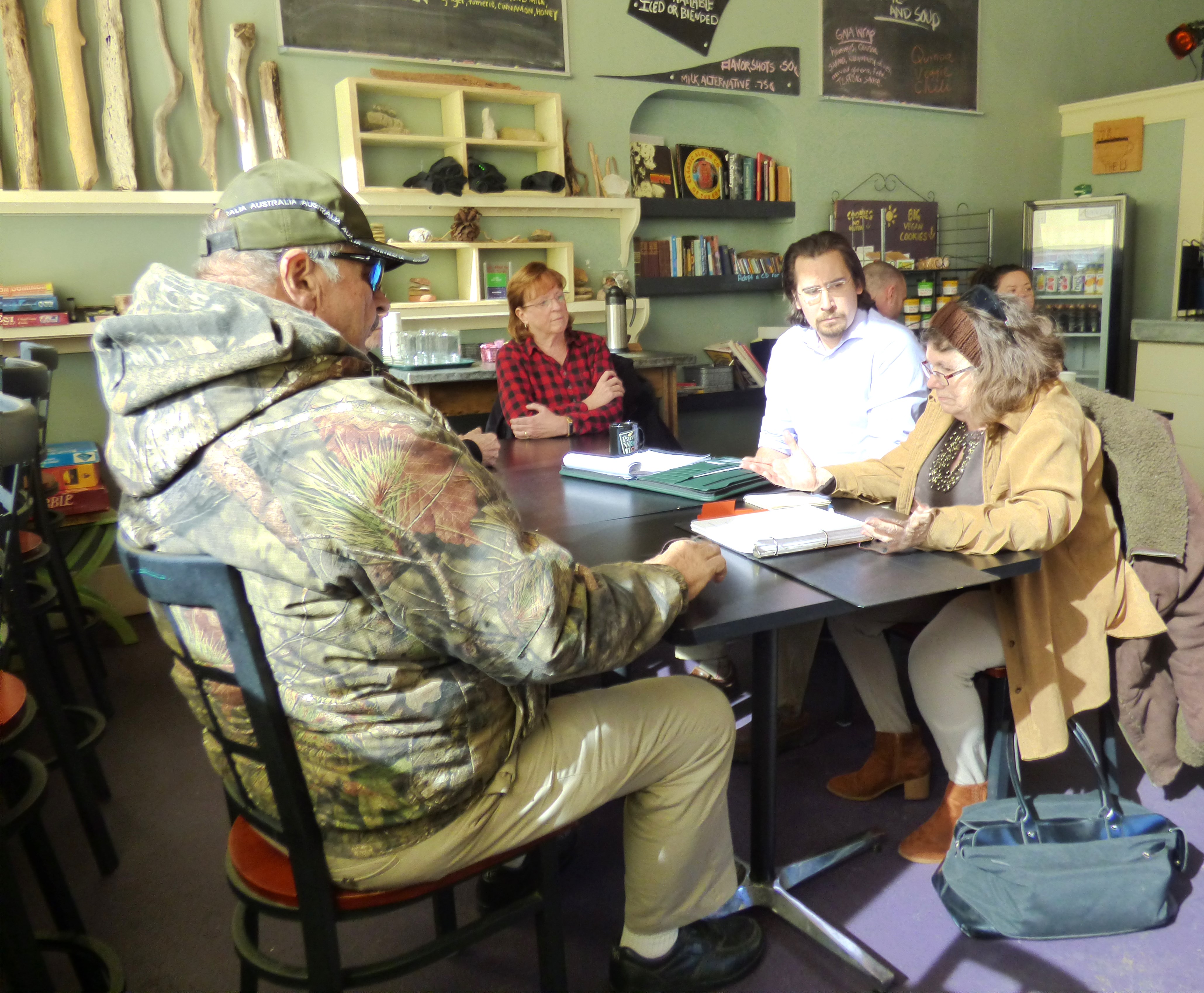
BUCHANAN – 78th State Rep. Brad Paquette’s office hours in Buchanan last month brought out people to both ask for assistance and discuss issues of interest to them. The hour long meeting with constituents was held at the Union Coffee house in downtown Buchanan.
Paquette, a first term state representative, holds office hours once a month at various locations in the district which covers central and southern Berrien County and four townships in Cass County.
Topics raised at the February office hours included veteran services, the state of the roads, school and local government funding and the overall state budget.
Paquette said he was skeptical of Gov. Gretchen Whitmer’s
latest road funding proposal calling for the state to pay for improvements through selling bonds. “I do disagree with bonding roads and then paying them off for the next 35 years,” he said. “It’s also kind of nebulous as to what work will be done.”
“The governor’s idea is to have more of the funding go to the roads most traveled although the whole state has to pay for the work,” he added. “There’s also the idea of creating a regional transportation authority in the Detroit area to raise taxes. I’ve gotten more response from constituents on that although it wouldn’t affect us.”
He said he and his colleagues would like to see money go into new technologies to find ways to make roads last longer. He noted that the practice of dumping money on the problem just makes prices go up, whether it’s the cost of materials or contracts.
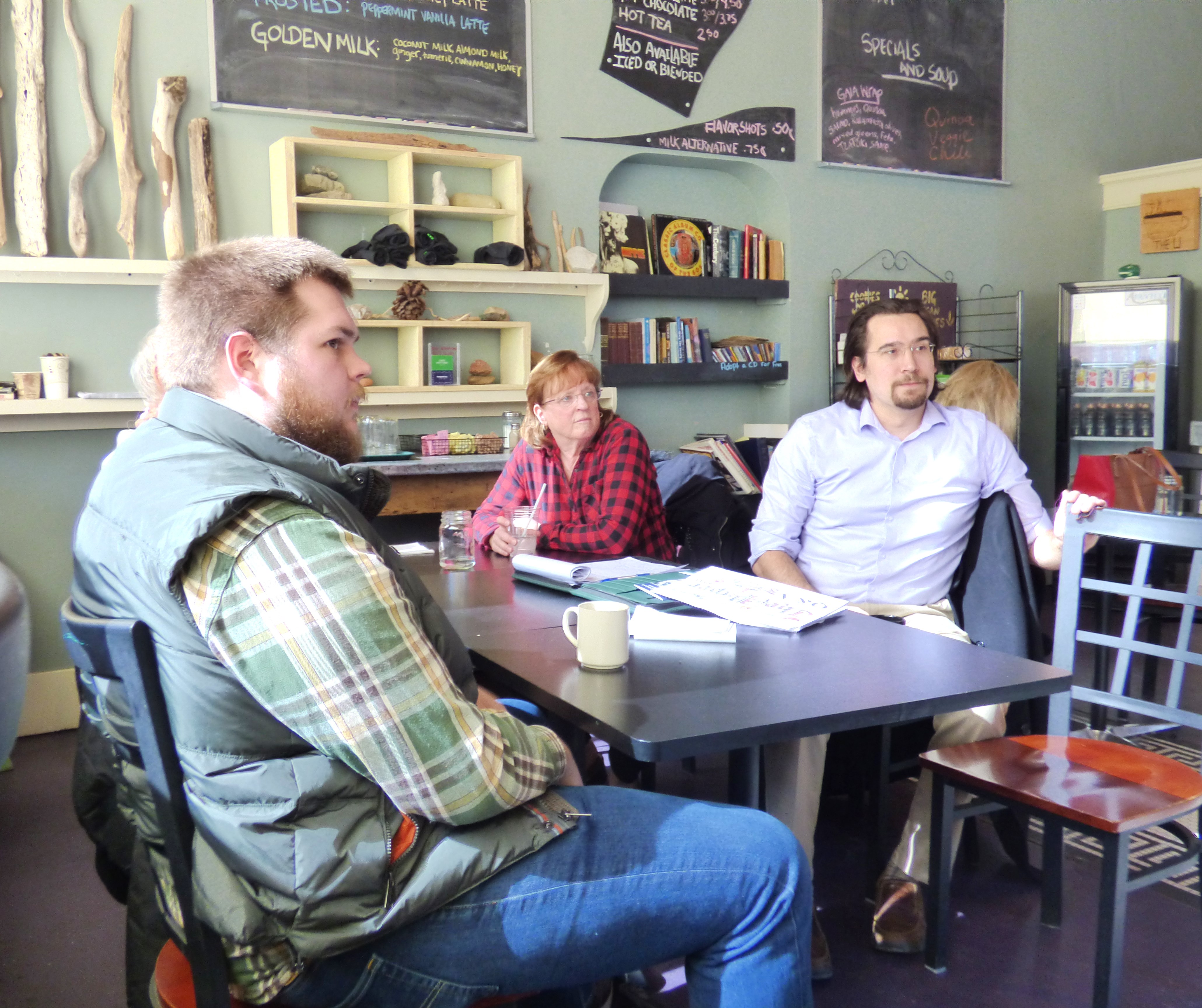
Former Buchanan City Commissioner Dan Vigansky said people should give a closer look at where tax dollars are actually going. “We have to look at where taxes are really going,” he said. “… Little communities like ours get ignored.”
Paquette said that there are people looking out for budget and spending concerns but that it’s hard to say no sometimes. “When people are asking for money, it’s hard to say no and it’s easier to spend other people’s money,” he said. “Government is reactive not pro-active, government wants to legislate problems away.”
The discussion ended up being a bit philosophical about the role of government. Paquette is a former civics teacher and said he always asked students what they thought the role of government is. “Is it about safety and security or preserving the liberties of people,” he said. “If we expand oversight, we can restrict freedoms. It’s a balancing act.”
“It comes down to people being involved in the process,” he said. “The government is only as good as the people are. We need to be building and growing good people, integrity and culture.”
People also talked about Whitmer giving the Democratic response to President Donald Trump’s State of the Union address earlier in February. Paquette said that while he disagrees with Whitmer on several issues, it was “cool to see the governor on the national stage.”
Paquette expects to be busy in coming weeks, both in Lansing and back here in the district. Legislation he’s proposed to reduce the concealed pistol license fee could be coming up for a vote. He initially pushed to eliminate the fee entirely but has reached a bipartisan collaboration to reduce it from $115 to $30 a year.
His view is that the current fee structure could prevent low income Michigan residents from being able to exercise their Second Amendment rights and obtain a permit to carry a concealed weapon. He testified before a state house committee in February and his bill, House Bill 5098, is currently in committee.
Back here, he’s leading a delegation of state legislators to the Argonne National Laboratory near Chicago on Friday, March 13. The goal of the visit is to learn more about the next generation of nuclear reactors at a time when state governments are looking for ways to find new sources of energy.
“We will be meeting with other energy leaders from other states as well for the tour,” Paquette said. “We seek to understand nuclear energy and the technologies that keep it safer and more efficient.”
The Argonne trip was organized by area resident Taras Lyssenko, an energy, technology and government consultant. He said most people don’t realize how nuclear reactors have evolved over the years to where they are now much smaller and safer than the plants built decades ago. He said people also have found ways to reprocess spent fuel.
Leave a Reply
You must be logged in to post a comment.