

By DEBRA HAIGHT
BCR Correspondent
ST. JOSEPH – A ruling last week in Berrien County Trial Court appears to expand the scope and reach of the 2012 U.S. Supreme Court decision in Miller vs. Alabama. Justices ruled then and again in 2016 that juvenile offenders convicted of first-degree murder should receive life without parole sentences in only the rarest of circumstances.
The ruling handed down by Berrien County Trial Judge John Donahue last week involved a 1980 case where a juvenile offender was convicted of second-degree murder. Michael Johnson, now 55, was 17 when he killed Sue Ellen Machamer, a classmate of his at Lakeshore High School.
Johnson pleaded guilty to second-degree murder later in 1980 and was sentenced
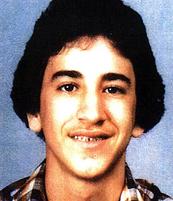
to life in in prison with the chance for parole at some point. He and his attorneys have appealed his sentence a number of times over the years, noting that the parole board has denied his applications for release numerous times.
Most recently last year, Johnson’s attorneys argued that a life sentence even with the chance for parole for juvenile offenders is unconstitutional. They said with the 2012 and 2016 U.S. Supreme Court decisions for those convicted of first-degree murder, the sentences for those like Johnson have ended up being harsher.

Judge Donahue, who is retiring at the end of this month, ruled that Johnson should be resentenced to a specific term of years. He cited recent findings by doctors and other medical professionals about the brain development of juveniles as the main reason for his ruling.
Supreme Court justices cited such evidence in their Miller decision, saying that a life without parole sentence should be handed down rarely when there is evidence of “irreparable corruption.” They told lower courts to consider a juvenile’s ability to know the wrongfulness of their actions as well as a juvenile’s past history and their home environment.
“It is apparent that between case law and legislation, the juvenile offender’s ‘step-children,’ left behind by the U.S. Supreme Court’s new focus on juvenile offenders, are those like Michael Johnson, who received a sentence of life with the possibility of parole, but find themselves serving a de facto life sentence as the Michigan Parole Board has not provided a meaningful opportunity to obtain release,” Donahue wrote.
“(This), in this court’s humble opinion, violates his procedural and substantive due process rights, denies him his Fourteenth Amendment Constitutional right to equal protection under the law, and violates the Eighth Amendment as well.”
Berrien County Prosecutor Michael Sepic disagreed with Donahue’s ruling. He

believes that Donahue incorrectly used the analysis associated with juvenile life without parole sentencings for this case which is a paroleable sentencing. He said his office is considering appealing Donahue’s ruling to the Michigan Court of Appeals.
As for the status of the county’s actual “juvenile lifer” cases, Sepic reported that some have already been resentenced to term of years and at least one is waiting for a Michigan Supreme Court ruling on whether the resentencing hearing should be before a judge or a jury.
Dakotah Eliason was the first to be resentenced in June, 2015 when he was sentenced to a term of 35 to 60 years in prison. Bobby Gene Griffin was sentenced last July to a term of 40 to 60 years in prison. Leonard Dee Williams was sentenced in February to a term of 35 to 60 years in prison. David Lamar Clayton is scheduled to be sentenced this week.
Leave a Reply
You must be logged in to post a comment.