

By DEBRA HAIGHT
BCR Correspondent
Berrien County Trial Courts have returned to full capacity after more than a year of shutdowns caused by the COVID-19 pandemic. Court officials announced the move in late June with the effective date for the change July 1.
Meanwhile, action also came last week in a couple of high profile cases. In one, a former “juvenile lifer” was resentenced to a term of years for the 1997 killing of his friend’s mother in Bridgman. In another case, a man convicted of murder was set free when new evidence emerged clearing his name.
The courthouses in Niles and St. Joseph have been closed to the public for more than a year, although a lot of business has continued including hearings, trials and sentencings.
It was last year in the spring of 2020 that the Michigan Supreme Court released its “Return to Full Capacity” guide to help local courts find their way through the pandemic. The guide outlined four phases with the requirements courts had to meet in terms of COVID infection rates and other markers to progress to the next phase.
Berrien County court officials announced in late June that the courts would be entering the final phase, phase four, as of July 1. Unlike in previous phases when public entry into either courthouse was prohibited or limited, phase four allows the public to again come into the buildings to conduct business.
Trial Court Administrator Carrie Smietanka-Haney noted that the Michigan Supreme Court’s Return to Full Capacity Guide was updated June 21, 2021 with all Michigan courts moved to Phase four of re-opening guidelines.
“In coordination between the Chief Judge and the Berrien County Health Department, the Berrien County Trial Court will thus be updating operations effective July 1, 2021,” she said.
The courts are relying on the guidance from the Berrien County Health Department including low community spread, stable to decreasing percent positivity, and good capacity for healthcare delivery and treatment. Should community conditions change, changes may be required at all operational levels.
She noted that pursuant to the recommendations of the Berrien County Health Department, the courthouse buildings will be open to the public. Public entering the courthouse facilities will be asked to self-screen for COVID symptoms and not enter the facilities if experiencing said symptoms.
In addition, masks are strongly encouraged for any members of the public not fully vaccinated from COVID-19, specifically when sitting in the gallery of the courtrooms. Members of the public will no longer be required to check-in with court staff prior to entry into the courthouses.
Relative to jury trials, jurors will continue to be required to socially distance during jury trials (including during juror selection) and are strongly encouraged to wear a face covering if unvaccinated. Jurors will also complete a daily health screening with court staff prior to accessing the facilities.
Because of those restrictions and due to continued social distancing, Smietanka-Haney said jury trials will continue to be closed to the general public but will be livestreamed to the court’s YouTube channel.
She noted that several types of court proceedings will return to being conducted in-person, while many proceeding types will continue to be held remotely via Zoom. A detailed listing of hearing types and how they will be scheduled are available at the Trial Court’s website.
The county’s Juvenile Center will continue to operate under the appropriate COVID-19 protocols as recommended by the Centers for Disease Control as a congregate care facility, she added. In-person visits with juveniles will now be allowed, with members of the public required to complete a health screening and wear a face covering while in the facility.
A detailed listing of services returning to in-person accessibility as well as those services which will remain remote can be found at the Trial Court’s website at http://berriencounty.org/1058/Trial-Court As noted by many court officials here and around the country, the pandemic has allowed courts to better use technology to meet people’s needs.
In the juvenile lifer case, Mark Abbotoy was resentenced by Berrien County Trial Judge Charles LaSata to a
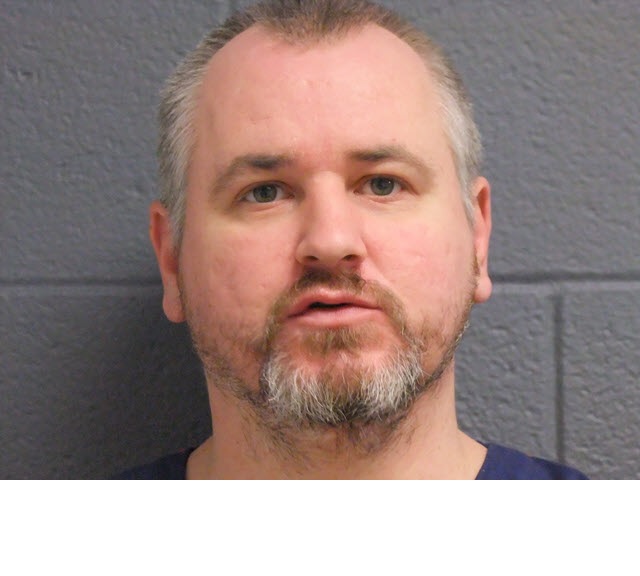
term of 40 to 60 years in prison for the 1997 murder of Connie DePalma in Bridgman. He has already served 25 years.
Abbotoy’s co-defendant, Anthony DePalma, the murder victim’s son, was sentenced last year to 27 to 60 years with credit for 23 years served.
Both had initially been sentenced to life in prison without parole before a 2012 U.S. Supreme Court changed how juvenile lifer cases should be handled. The high court ruled that a life without parole sentence amounted to cruel and unusual punishment for juveniles convicted of first-degree murder except in rare cases.
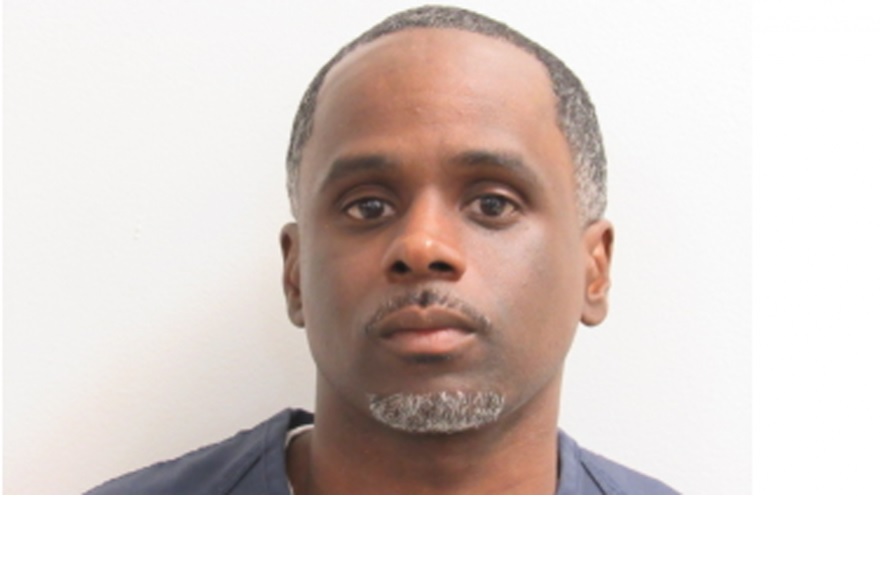
In the other case, Berrien County Prosecuting Attorney Steve Pierangeli reported that his office had filed a motion to vacate the 2005 murder conviction of Corey Quentin McCall based upon newly discovered evidence. The vacation order was made in conjunction with McCall’s attorney and the Michigan Attorney General’s Conviction Integrity Unit.
“It goes without saying that it is tragic Mr. McCall has served any time in prison for this crime,” Pierangeli said. “Prosecutors in Berrien County make every effort to prevent this from occurring. In this case, Mr. McCall was convicted when the perpetrators of the crime had information of his innocence and waited until recently to disclose it.”
“I fully recognize, however, that setting aside the conviction cannot begin to adequately compensate Mr. McCall for what he has lost,” he added. “Nothing can restore his lost youth or return to him the years he spent in prison.”
Berrien County Trial Judge Angela Pasula granted the motion on June 25 and McCall was released from prison last week. McCall had been convicted of murder of three individuals and the attempted murder of a fourth person during the commission of a robbery in March, 2005 in Benton Harbor.
A surviving victim identified McCall as one of the assailants and testimony at the original trial also indicated that McCall had been in the company of co-defendant Andrew Miller that same say.
McCall’s release came after the Attorney General’s Conviction Integrity Unit received new information in 2020 and started an investigation. More people were interviewed and it was concluded that McCall did not participate in the robbery and murders while others not initially identified were involved.
Leave a Reply
You must be logged in to post a comment.