
By DEBRA HAIGHT
BCR Correspondent
ST. JOSEPH, MI – With Flock Security Cameras a hot topic around the country and people voicing privacy concerns about the license reader program, Berrien County Sheriff Chuck Heit tried to allay some of those concerns in a presentation to Berrien County Commissioners last week.
Heit gave commissioners information about the county’s use of Flock cameras as well as what they can and can’t be used for. He concluded by reporting on instances in recent years where the cameras helped solve crimes including a non-custodial parent kidnapping case from Florida.
“We entered into a pilot program for 20 cameras on 5-19-22,” Heit reported. “Based on the success of the program, we entered into five year contract with Flock Safety on 3-14-25. The pilot program lasted longer than expected because it took longer to get the last camera in place in the state right-of-way.”
“Through the more than four years that the cameras have been in place, we have found them to be an invaluable tool in solving crimes,” he said. “We’ve located kidnapped individuals, recovered stolen vehicles and property, and ultimately have helped keep our communities safer. It doesn’t replace law enforcement but it is a great tool.”
Heit noted that he had sent a letter to commissioners outlining the data from the pilot program and said those successes have continued to this day. The county has a total of 20 cameras in place around the county with one of them being mobile and able to be placed at different locations, he said, adding that other area agencies also have them.
“With the recent issues concerning these cameras, we will add Flock information to our monthly reports,” he said.
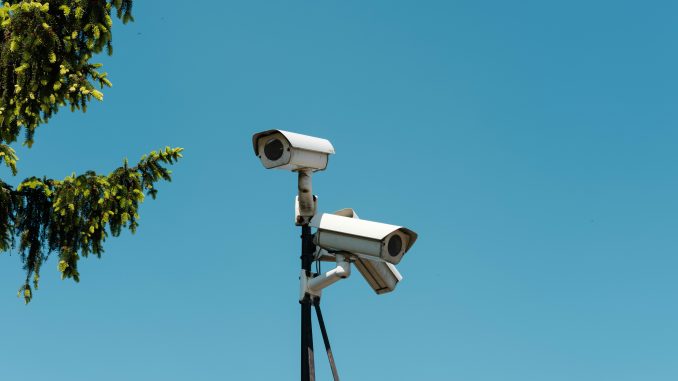
Heit then went into detail about what the Flock Security Camera system actually is and what it can and can’t do. “Flock Safety Cameras are an automated license plate reader system,” he said. “They capture a vehicle and its license plate as they pass by a camera at a certain location, time, and place. They do not provide constant surveillance video like that of a video camera at a business or home surveillance cameras such as Ring cameras and others.”
“Over the last four years, the sheriff’s office has had several examples where Flock Safety Cameras have helped locate a parental kidnapping victim in Niles, helped solve crimes such as armed robbery [and] aggravated assault, and have led to the recovery of stolen vehicles and property.”
“We hear a lot out there about these cameras doing constant surveillance, but that is not what a Flock camera does,” he emphasized.
He listed seven things the cameras cannot do, including knowing who the registered owner of a vehicle is or if the license plate affixed to a vehicle is actually registered to the vehicle. Also, the camera cannot tell who is driving the car as it does not have facial recognition and doesn’t know where a vehicle came from or where it’s going or the intent of anyone in a vehicle.
The last point he made in connection to what the cameras can’t do is that the data is kept forever. Currently, the captured data is stored in the system for 30 days and there has been talk of shortening that time period to something like seven days depending on the status of a case.
As for what the cameras can do, he said they take a snapshot of both the vehicle and its license plate at a specific location at a fixed time and date. It then runs that information through the LEIN database and notifies law enforcement when there is a hit where a vehicle is wanted in connection with a crime or a missing child-amber alert.
He said that only officers with a legitimate law enforcement purpose and a police case number can query a license plate in the system or ask for pictures of vehicles with certain characteristics.
Heit then showed a list of all the different offenses the cameras were able to assist in arresting a suspect. The most common offenses where the cameras provided information were for a wanted person, the theft of a motor vehicle, larceny and theft, and hit and run incidents.
Other offenses where the cameras were of use to a lesser extent included missing persons, stolen property, drugs and narcotics, assault, burglary, financial crimes, malicious destruction of property, resisting police, counterfeiting and forgery, trespass, child abuse, animal offenses and alcohol offenses.
He then gave specific examples of where the cameras helped solve cases, including a rash of vehicle break-ins at the Welcome Center in New Buffalo and a report of a stolen vehicle in Benton Harbor. “Seeing a picture was invaluable and helped solve the crimes,” he said.
“I believe strongly that Flock cameras are vital to law enforcement,” he said. “But there are responsibilities and rules that come with that, such as with LEIN, you have to have a valid purpose. But even with the public safety benefits, we know there are privacy concerns.”
He then gave a number of other success stories involving the cameras.
In one instance they worked with South Bend police and were able to track a homicide suspect’s vehicle when they drove into Niles. The other was the parental kidnapping case out of Florida where they tracked the vehicle to the Niles Wal-Mart and were able to recover the child.
A third case involved a stolen vehicle out of Kalamazoo that was also found to have weapons. The last case involved stolen trailers in the New Buffalo area where the cameras helped them make an arrest and recover the trailers. They were also able to catch an armed robber who robbed a liquor store in Bertrand Township.
“Flock is a great tool. It doesn’t replace good police work but it sure helps us solve crimes a lot faster,” he said. “I definitely understand that privacy rights are important. I do recognize there’s a balance with privacy and accountability … The cameras can help solve crimes quicker and also exonerate people.”
Commissioner Chokwe Pitchford thanked Heit for the information. “It’s important to get the information and be educated about what guardrails are and what restrictions we could to do to address public concerns.”
County Board Chairman McKinley Elliott noted that people’s privacy rights are different when they’re on a public street than in their own home. “Even constitutional rights are conditional,” he said. “People’s explicit rights to privacy on sidewalk and street are not same as in home.”
“Public safety has been given deference by the courts,” he added. “It is a balancing act. We have to protect the rights of individuals but also recognize that assists in one of important tools of government which is public safety”
Heit concluded the presentation by noting that people’s smart phones do a lot more tracking than a Flock camera does.